Certain errors constantly appear in TV shows and movies portraying chess games. I’m no expert player, but I know the rules well and used to go to tournaments. Here’s a guide on mistakes to avoid.
The starting position
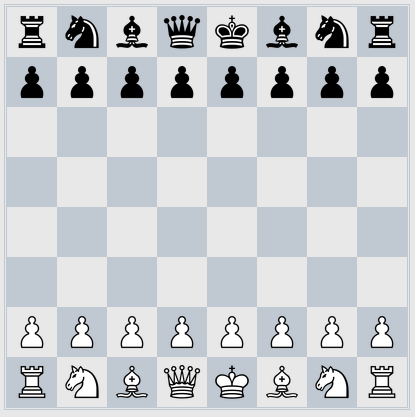
First, the board must be positioned correctly. The lower right square from each player’s viewpoint must be white. It’s amazingly common for illustrations and TV and movie games to get this wrong. See, for example, this well-known scene from The Seventh Seal.
Queen faces queen, king faces king. The white queen is on a white square, and the black queen is on a black square. Going outward from the queen and king are the bishops, knights, and rooks. The colors of the opposing sides don’t have to be black and white, though they’re called that by convention.
The play
Chess etiquette says that you leave your opponent undisturbed while they’re considering their move. You don’t rush them, even if they’ve been contemplating a full minute. A good player will always take time to consider the possibilities. Casual conversation during a game is unusual. Silence can make the scene dull, so the actors can speed up the play and perhaps have a conversation related to the plot. Avoid showing pressure on the opponent, unless it’s to show how rude a player is.
The moves in a visual presentation should be plausible. I don’t know who controls this, but probably the script writer isn’t expected to dictate each move. Maybe the actors pick their moves, or maybe the director does. Probably the game won’t be shown move for move, anyway.
The chess game in The Thomas Crown Affair is nicely done. The moves are plausible, and the players are quiet. The woman is trying to distract the man with her looks, but that’s presumably part of the story.
Terminology
A gambit is the offered sacrifice of a pawn in the game’s opening.
The pieces that look like crenellated towers are rooks, not castles.
A stalemate is a position where a player isn’t in check but has no legal move. The game is a draw. Draws by agreement or by other rules aren’t stalemates.
Checkmate out of nowhere
What really bugs me is the scene where a player effects a checkmate without the opponent seeing it coming. This happens only among beginners, but we see it all the time. In a normal game, one player will realize defeat is inevitable at least a few moves before the end. Yes, a checkmate out of nowhere is dramatic, but there are other ways to achieve drama. The player on the losing side can sense the noose tightening. The one with the advantage can announce, “Mate in four.” Then maybe the opponent will say. “I don’t think so … Damn it, you’re right. I resign.” Good actors can make more out of that than out of a sudden checkmate. Most games among competent players end with a draw or a resignation, rather than being played out to the checkmate.
A player can resign by saying “Resign,” or by tipping over the king.
Here’s an article with a long list of TV shows, movies, and comics with chess blunders.
These tips may not apply to chess variants. Speed chess is fun; it imposes a tight time limit on the players’ moves, so it could allow a livelier scene. No one knows the rules for Star Trek’s 3-D chess, so anything goes. But if you’re portraying a game of standard chess, these tips may help you to avoid mistakes without sacrificing drama.