Gary McGath


About Gary McGath

I am a freelance technical writer in Plaistow, NH.

Gugusse et l’Automate: Rediscovery of the first robot film

If you’ve seen the movie Hugo (and you should), you remember the wonderful scene where a humanoid automaton is restored and goes into action, revealing an important secret. Georges Méliès found these machines fascinating. His 1897 Gugusse et l’Automate presents an automaton (played by an actor) in what has been called the world’s first film about a robot. Bill McFarland brought a box of old films from Grand Rapids, Michigan to the National Audio-Visual Conservation Center in Virginia, and one of them was a third-generation copy of Gugusse. Film historians had known it existed, but no one now living had seen it. The preservation experts digitized the one-minute film, which I’m sure must have been fragile, and it’s now available freely on YouTube and other sites.


Oligarchy: A conspiracy theory of the left 2   Recently updated !

Oligarchy: Government by the few. (Merriam-Webster)

Claims from the left that certain people, usually very rich ones, are “oligarchs” of the USA are common. The Mother Jones website boasts at the top of every article that it’s “a source that’s not owned and controlled by oligarchs.” If the USA has oligarchs, it must be an oligarchy. That’s an odd claim, since most people think the country is a democracy. Perhaps a dysfunctional one, but still a government run by elected officials.

It’s true that Congress has grown more passive than ever, but if the US has ceased to be a democracy, what it has become is an autocracy under Donald Trump. Like Sauron, he doesn’t share power. Perhaps if you count the most powerful Cabinet members, such as Hegseth and Noem, and advisors like Miller, it’s an oligarchy. But that’s not what the oligarchy theorists are talking about. Their claims are a new version of the “secret masters” conspiracy theories, claiming people like Elon Musk and Jeff Bezos are the real puppet masters. In older versions, it was the Rothschilds or the Jewish Bankers. Some on the American right consider George Soros the leading Jewish oligarch. The new left-wing version differs mainly in its lack of overt antisemitism (though even that has started to change in the last couple of years).

There’s a long history of claims that a small number of people without official power run countries or even the whole world. The “iron law of oligarchy” claims that all governments eventually devolve into oligarchies. The people nominally in charge take orders from them because of financial pressure or blackmail. In this scenario, the president is merely a front man. This raises an obvious question: Why would they pick Donald Trump as their puppet? You’d think they’d pick someone who’s more competent, predictable, and superficially respectable.

Conspiracy theories aren’t grounded in evidence or plausibility. They rest on emotional satisfaction. If a cabal of the rich is running America, they’re a target to blame everything on. They’re incredibly rich, so they’re not like “us.” Nobody voted for them, so the voters are absolved of guilt.

But the bitter truth is that officials elected by Americans, not puppeteers behind the scenes, are responsible for what has happened to America.


Book discussion: Fighting for the Freedom to Learn   Recently updated !

The history of what’s known as “school choice” is more convoluted than I had realized. Fighting for the Freedom to Learn, from the Cato Institute, maps out that history in a set of twelve essays by different authors. Together, they add up to a narrative from the colonial era to modern times in the United States. The book is less polemic than its title may sound, providing a lot of information for anyone interested in the history of American education.

This isn’t an area where I have much knowledge, so I can’t say confidently how accurate it is. I can say that it presents an informational tone, has lots of end notes, and doesn’t say anything that looks obviously suspicious.

Most people today look at advocacy of school choice as an exclusively right-wing issue. (Everything today is a right-wing or left-wing issue.) In the past, though, it’s been complicated. Today we think of public schools as secular institutions, but for much of our history they were tools of nativist Protestant hegemony. I’m old enough to remember being told in school to pray to “Our Father.” In the first half of the nineteenth century,

A crucial factor of the development of the state role in education was an expansion of the concept of the citizen. With increased discussion of alternative forms of political authority, there was a renewed appreciation of Aristotle’s argument that citizens should be shaped by state-directed education to match the form of government under which they would live.

The concern increased along with the growth in Irish immigration, which was mostly Catholic. Senator James Blaine promoted state constitutional amendments, as well as unsuccessfully urging a national one, barring the granting of government funds to religious schools, while insisting that they could “not be construed to prohibit the reading of the Bible in any school or Institution.” By “the Bible,” he meant the King James Bible. The target of the amendments was Catholic schools.

The authors acknowledge that following the Supreme Court’s Brown decision and the Civil Rights Act, many segregationists saw private schools as a way to maintain racial purity, but they insist this is far from the whole story. Public schools with predominantly black student bodies often got a bad deal (and sometimes still do).

Throughout American history, people from all walks of life have sought educational options for a variety of pressing reasons, most of them rooted in freedom. The roots on the left are deep and fascinating. They are found in the centuries-old struggle for educational opportunity in the black experience, in the liberal academics who saw vouchers as a tool in the War on Poverty, in the counterculture dissidents who sparked the “free schools” and homeschooling movements, and even, for 20 years, in the Democratic Party’s national platform.

There’s a lot to learn from this book. I recommend it to people interested in American educational history.


Book discussion: You Don’t Own Me   Recently updated !

I’ve been neglecting book discussion posts. Starting with this one, I want to make them a more regular feature of this blog, at least one a month. Books are important, and doing this will not only help me to get the word out about them, it will push me to read more.

(I thought I’d published this a month ago, but I can’t find it in my blog. Here it is now. My next book discussion should follow very soon.)

Individualism isn’t just a political concept. It’s an outlook on life, the recognition that each person is distinct and important. An outlook that values the individual affects our personal interactions. The arts can affirm this outlook or reject it. Timothy Sandefur’s You Don’t Own Me addresses the intersection of the arts and individualism, with mixed results.

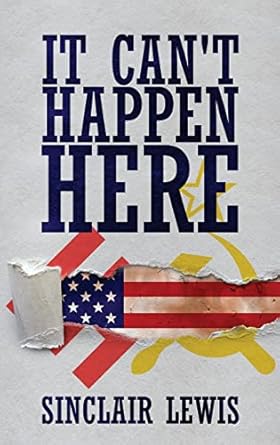
Cover of You Don't Own Me by Timothy SandefurThe cover art looks like jigsaw pieces that don’t obviously fit together, which could also describe the book. It’s a series of loosely connected essays. The second one is the text of a speech, which with a little editing would have fitted better into the book. Some of the sections are quite good. “Zora Neale Hurston, Undefeated” makes me want to learn more about that author. On the other hand, “Anarchy, State, and Zombie Dystopia,” a discussion of The Walking Dead, left me confused because he assumes the reader is already familiar with it. Someone not as obsessively familiar as me with Star Trek might say the same of “Navigating by Fixed Stars: The Moral Trajectory of Star Trek.”

Fragmented as it is, the book will still introduce readers to authors and musicians who have upheld individualist values. It may also give them new information about familiar creators. For instance, I hadn’t known that the time from William Sydney Porter’s first published story as “O. Henry” to his death was barely more than a decade. In at least one case I wish he’d given more information; he credits the song “You Don’t Own Me” to singer Lesley Gore but says only that “two men” wrote it. Songwriters should get credit, but too often only the people who sing their songs get it. That’s especially unfair when the lyrics are the important point, as they are in the title essay.

The book isn’t bad, but it’s hard for me to give it a strong recommendation. Sandefur’s Frederick Douglass: Self-Made Man is more interesting, and I’d suggest reading it first. If you like his writing, you may want to come back to this one.


Thoughts on the February 21 Merrimack protest   Recently updated !

ICE wants to set up a facility in Merrimack, NH to hold its abductees. Governor Ayotte didn’t notice as ICE communicated with state officials about it, or else she’s lying. Lots of people in New Hampshire are outraged. On February 21, I went to Merrimack for the second time to attend a protest against the plan. I’m glad I did, but my reaction is mixed. The spirit I saw expressed wasn’t as good as the first time.

Man decked out with many US flags at Merrimack anti-ICE protestThere were some inspiring highlights, especially a man who stood on a huge snowbank decked out with many US flags. He looked like a human kite, and I almost worried that the wind would lift him into the air. People were there to oppose the human warehouse, which certainly would follow ICE’s usual standards for ignoring due process and treating people cruelly. Many were angry at Governor Ayotte, a modern-day Pontius Pilate who washes her hands of the whole thing.

I wore a small clip-on body camera and left my phone behind. It can’t track me, it’s inconspicuous, and it wouldn’t be as bad as losing a phone if anyone took it from me. Anyone who regularly goes to protests or observes ICE activity should consider getting one.

The crowd was big, and the atmosphere was friendly. I even ran into another member of my UU choir. At the same time, there were some aspects that made me uncomfortable.

There was a lot of chanting of obscenities. Now I’m aware that many on the left think insults and curses are the best way to win people over, but in practice it doesn’t work. When they don’t persuade people with their curses, they think their curses must not have been nasty enough. But I have to explain this, incredible as it may sound: Most people, hearing someone yell curses, don’t say, “Of course, that makes so much sense!” In fact, they’ve been known think that people who spew curses aren’t worth listening to.

There were lots of references to the facility as a “concentration camp.” It won’t be a “camp” of any kind. A concentration camp houses large numbers of people, usually based on ethnicity or culture, in barracks, makeshift buildings, or tents. In addition to the Nazis’ notorious concentration camps, examples include the British relocation of Boers during the Second Boer War and the United States’ internment of Japanese Americans during World War II. The building in Merrimack would crowd abductees to an indoor space with barely something to sleep on. The Germans’ concentration camps were a preliminary step to mass murder; others weren’t, though all were cruel to varying degrees. Let’s call a prison a prison.

The level of cursing and the widespread “concentration camp” terminology were new to me, as anti-ICE and anti-Trump protests go. We’ve heard “Alligator Auschwitz” before, which is wrong for different reasons.

Several signs treated Trump’s felony conviction as an important point. The conviction was for not treating hush money payments as campaign expenditures, which is quite minor compared to many other things he’s done. On the other hand, I didn’t see many references to his having over a hundred people killed at sea in unprovoked military attacks. They’re mass murder, and it hasn’t been stressed enough. People have even debated whether it’s OK to come back and finish off any survivors. That’s like asking whether it was legitimate for old-style pirates to make their captives walk the plank.

In times like these, though, we can’t be too picky about our allies. What’s important is that hundreds of people expressed their opposition to an inhumane government facility in New Hampshire.