Monthly Archives: April 2026


Upcoming silent film: D. W. Griffith’s America   Recently updated !

On June 23, I’ll be back at the Plaistow Library to accompany the silent film America, made by D. W. Griffith. It will start at 6 PM and run about 2 hours and 20 minutes. Reservations are encouraged so the library knows how many people to expect.

The show is part of the events observing the 250th anniversary of the Declaration of Independence. There will also be a presentation on the Battle of Bunker Hill on June 9, held by the Plaistow Historical Society. As I’m writing, not much information is available on it, but it should be interesting.

Griffith is famous (or infamous) for his 1915 film Birth of a Nation, which presents the Civil War and glorifies the KKK. America, released in 1924, is about the American Revolution. Both films have spectacular battle scenes and stories focusing on individuals. Both have a mix of accurate history and made-up stuff. America culminates in a made-up battle at a made-up place, but the early parts of the Revolution (Lexington, Concord, and Bunker Hill) are presented fairly accurately. The film doesn’t have the same level of racial problems as the earlier film. There is a black servant, but he isn’t mocked or caricatured (though I’m pretty sure a while actor played him). Natives who fight for the British are called “savages.” Things like that happen in century-old movies.

Poster for the film "America" (1924)The chief villain is a Tory rather than anyone from Britain. Lionel Barrymore portrays Walter Butler, a real-life Loyalist officer, as a sadistic schemer with an evil grin, which he wasn’t in reality. The British regulars are generally shown as brave soldiers. I wonder if Griffith remembered that the maker of the 1917 Spirit of ’76 got a long prison sentence for making an “anti-British” movie when Britain was our ally in World War I. It may have seemed safer to show Tories doing nasty things. Even as it was, the British Board of Film Censors banned the film.

The story of the war is intertwined with a love story; a Patriot is in love with the daughter of a man who remains loyal to Britain. Both of them prove honorable in the end.

As usual, I’ll provide original, live music for the film.

Strange domain stuff 3   Recently updated !

Recently I got two emails concerning the use of the name “McGath” in Chinese domains. It’s very strange. Here’s the first, which I got on April 25, 2026:

(If you are not the CEO, please forward this message to your CEO since this is urgent. If you consider this has been sent to you in error, please ignore it. Thanks.)
Dear CEO,
This is a formal email. We are the Domain Registration Service company in Shanghai, China. I have an issue to confirm with you. An application was received by us from Yahui Ltd on April 25, 2026. They desire to register “mcgath” as their internet keyword and Chinese domain names (mcgath.cn, mcgath.com.cn, mcgath.net.cn, mcgath.org.cn). But after checking it, we find this name conflicts with your business name or brand name. To resolve this issue better, it’s necessary to send this email to you and verify if this company is your distributor in China? Best regardsFrank Liu
General Manager

The message came from 163.com, which is a Chinese email service often used for temporary addresses. It’s suspicious that the message doesn’t name the domain service which allegedly is contacting me. If this was an attempt to trick me into anything, I can’t tell what it could gain from me. I replied saying I have no business presence in China. On April 27 I got this mail:

To whom it concerns,

We are the company who submitted the application to register “mcgath” as Chinese domain name and internet keyword. We intend to register the Chinese domain names “mcgath.cn” “mcgath.com.cn” “mcgath.net.cn” “mcgath.org.cn” and internet keyword “mcgath” and have submitted our application. Currently, we are waiting for Mr. Frank Liu’s approval. These CN domains and internet keyword are very important for us to promote our business in China. Even though Mr. Frank Liu advised us to choose another name, we will persist with this name.

Kind regards

Lisheng

Even though my surname is unusual, I don’t own it and can’t stop anyone else from using it. However, I can’t think of any honest purpose for this. While I know little about the Chinese language, I’m pretty sure you can’t even pronounce the name properly in the Chinese phoneme set. Maybe they’re planning to squat on the name in the hope someone (like me) will buy the domain? I can’t grab up every possible domain that contains “mcgath.” A worse possibility is that they’re planning some impersonation scheme outside the reach of American lawyers. I can’t do anything about it before it happens, and it seems like a strange way to set up a scam.

All I can say right now is that I have no control over or connection with those domains, and I’m not responsible for whatever they do with them.


Book discussion: Toscanini: Musician of Conscience   Recently updated !

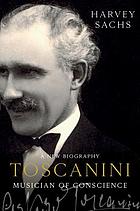
Toscanini: Musician of Conscience was a huge reading project but worth it. It covers the long career of one of the most important orchestra conductors, the man who conducted the premiere of Pagliacci in 1892 and lived long enough to make long-playing records. He was a celebrity in Europe and the Americas and courageously stood up to Mussolini in his home country.

I must admit to skimming through parts of the book. His role in music and politics is most important to me, and I went quickly over parts dealing with his personal relations.

Toscanini was a top-rank conductor with an incredible memory, but I wouldn’t want to be a musician under him. He demanded the best from his musicians, and sometimes he could be extremely rude and unfair with them. On one occasion, he broke a violinist’s bow with his baton. At the same time, he recognized excellence.
In politics, if not at the podium, he was an enemy of tyranny. After a brief period of admiring Mussolini, he recognized that the would-be Duce was a brutal power-luster. In 1924 he refused an order to display Mussolini’s picture. On one occasion, when he refused to perform the Fascist anthem, a gang of Blackshirts beat him up as the police passively watched. In 1938 he left Italy and didn’t return until after World War II.

Sachs discusses his relationships with musicians who remained in Germany and Italy during the dictatorships. Withdrawing from the Bayreuth Festival was a painful decision for him. He condemned Wilhelm Furtwängler for continuing to lend his prestige to the Nazi government.

Sachs writes about an incredible number of affairs Toscanini had with women. He lets Toscanini look honorable for the most part, but I have to wonder. I didn’t see any mention of whether he ever got anyone pregnant; while he wasn’t an observant Catholic, he lived in a culture that was strongly hostile to abortion and even birth control. But as I said, I skimmed over those parts of the book, so I may have missed something.

My main complaint about the book is that its mentions of years are thin. I often had trouble figuring out in which year an event took place. That can be especially annoying if you’re using the book for reference.

This book isn’t a light weekend read, but it’s a fascinating look at an important musician and a courageous person. If you’re willing to commit the time, it’s an excellent book.


25th Amendment 101

A lot of people on the left are engaging in magical thinking. They claim that the 25th Amendment of the US Constitution can somehow be used to remove Trump from power. It can’t. It shouldn’t be hard to understand. The relevant text is Section 4 of the amendment:

Whenever the Vice President and a majority of either the principal officers of the executive departments or of such other body as Congress may by law provide, transmit to the President pro tempore of the Senate and the Speaker of the House of Representatives their written declaration that the President is unable to discharge the powers and duties of his office, the Vice President shall immediately assume the powers and duties of the office as Acting President.

 
Thereafter, when the President transmits to the President pro tempore of the Senate and the Speaker of the House of Representatives his written declaration that no inability exists, he shall resume the powers and duties of his office unless the Vice President and a majority of either the principal officers of the executive department or of such other body as Congress may by law provide, transmit within four days to the President pro tempore of the Senate and the Speaker of the House of Representatives their written declaration that the President is unable to discharge the powers and duties of his office. Thereupon Congress shall decide the issue, assembling within forty-eight hours for that purpose if not in session. If the Congress, within twenty-one days after receipt of the latter written declaration, or, if Congress is not in session, within twenty-one days after Congress is required to assemble, determines by two-thirds vote of both Houses that the President is unable to discharge the powers and duties of his office, the Vice President shall continue to discharge the same as Acting President; otherwise, the President shall resume the powers and duties of his office.

Action under this provision requires action by the vice president. By James David Vance. By Trump’s puppet. He isn’t going to do it. Perhaps he’d like to stage a coup, but Trump’s base would turn furiously against him if he tried. Besides, the other requirements would keep him from making it stick.

In addition to the VP, the provision requires the action of a majority of the Cabinet or of “such other body as Congress may by law provide.” Some people in Congress are trying to create such a body, but Trump would veto the bill. They’d need 2/3 of both houses to make it a law. Not going to happen. Nor is the Cabinet, which consists of Trump loyalists, going to turn against him.

But suppose alien mind control beams make Vance and the Cabinet agree to declare Trump unable to discharge his powers and duties. All Trump has to do is say, “I am able,” and he’s back in power until Congress resolves the issue. To make the removal of his powers stick, a 2/3 vote of both houses is necessary. Not going to happen.

I’m excluding hypothetical cases where Trump goes into a coma and can’t do anything. That’s what the 25th Amendment was designed for.

Impeachment is a lower bar. It requires a majority of the House and 2/3 of the Senate. That’s still extremely unlikely, but it’s not as improbable as the 25th Amendment path.

If facts matter anymore, the case for impeachment is stronger than the case for declaring him incapable of doing the job. Has Trump committed “high crimes and misdemeanors”? Tons of them. Is he incapable of carrying out his duties? That rests on a claim that he’s clinically insane, which is more open to dispute.

The Democrats in Congress can read the Constitution, or at least they have staff members to explain it to them. They know all this. So why are they pursuing an impossible path? I think it’s to divert attention from Congress’s failure to impeach Trump. They can pretend they’re doing something, knowing that Vance will protect them against any action actually happening. They can say, “Hey, we tried,” knowing full well they didn’t.

What about all the people on Bluesky who don’t have public images to manipulate? That’s easy, too. They’re stupid. In the Bonhoeffer sense, that is.


Book discussion: How Jesus Became God

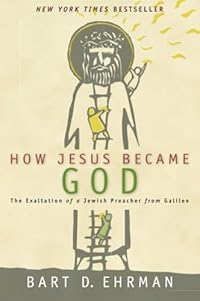
Christianity is a big part of our culture, and even non-Christians have to make some sense of it. I like Bart Ehrman’s treatments of Biblical research. He’s skeptical but not belligerent. I’ve previously read his Misquoting Jesus and enjoyed it. How Jesus Became God addresses questions I’ve been curious about: Why do Christians think he was God incarnate? What exactly do they mean by it? The average Christian isn’t sure, and the more you dig into the questions, the weirder it gets.

Ehrman accepts the existence of the historical Jesus but says he never claimed to be divine. His status gradually grew after his death. Jesus’s followers believed he had risen from the dead, so he was the “Son of God” in some sense, at least after his resurrection. By steps which Ehrman traces, the idea expanded. First he gained special status after the resurrection; then he was anointed of God through his ministry, then from his birth, and at last from the beginning of time. Many variations of these views existed side by side, with their advocates calling each other heretics. The Nicean Council tried to standardize the belief, but it wasn’t till years later that Christianity mostly settled down to the currently standard view.

Cover of How Jesus Became GodThis view is that Jesus is God but isn’t God the Father; that God is one but also three; that the Son was begotten of the Father but always existed from the beginning of time. Make sense of that if you can. For most Christians, these details don’t matter, but early Christians thought that if they didn’t get Jesus’s nature exactly right, they might go to Hell for blasphemy. Apparently God is full of mercy but will torture believers forever if they don’t pass a theology quiz.

Ehrman notes that the only Gospel in which Jesus claims to be a divine being is John, which scholars think was written later than the others. If he really made such claims, he notes, it’s strange that Matthew, Mark, and Luke don’t mention them.

In Ehrman’s view, Jesus was an apocalyptic preacher, expecting the world to end soon and be replaced by the Kingdom of God under his leadership. He thought he was a Messiah but not a divine being. There were many others like him. Ehrman thinks the reason Christianity was so successful was that Jesus’s followers had “visions” of him as a resurrected person. He uses the term as a neutral one, not taking a position on whether they were real or not. There comes one of the problems with the book: it promotes a compartmentalized way of thinking. Ehrman refuses to take a stand as a historian on whether the resurrection happened or not.

He writes: “Religious faith and historical knowledge are two different ways of ‘knowing.’ This effectively grants equal validity to both. Elsewhere he claims, “University intellectuals almost never speak of ‘objectivity’ any more, unless they happen to live on the margins of intellectual life.” If objectivity is impossible, if research and bald assertion have equal epistemological status, then anything goes.

Ehrman’s description of the official Christian (or at least Catholic) position on Jesus’s nature makes it sound even crazier than I had thought. He argues convincingly that Jesus probably didn’t have a proper burial but was just thrown on a pile of bodies; that was what the Romans did with crucified people. But if Jesus wasn’t buried in a tomb, there couldn’t have been an empty tomb to find. The whole account unravels, yet Ehrman won’t say that the claims of Jesus’s recognition are groundless fantasy.

These notions aren’t harmless stories. As Ehrman notes, Christian authorities have had many people tortured and executed for heresy. The Jewish people were persecuted for centuries for killing the immortal God. Nonsense should be called out as nonsense when it affects people’s lives.

Even so, How Jesus Became God is very readable, and Ehrman’s explanation of the development of Christian beliefs is fascinating. If that’s a subject that interests you, I think you’ll like the book.