A note on Fanny Mendelssohn
Fanny Mendelssohn, also known by her married name Fanny Hensel, was a sister of the 19th-century composer Felix Mendelssohn. While she wasn’t nearly as famous as her brother, she was an excellent composer herself, and she doubtless would have been better known if 19th-century European society didn’t discourage women from professionally writing music. The website HenselPushers is devoted to publicizing her music and making it available in printed form. The site maintainer’s name isn’t given, but it’s been going for quite a while and appears reliable.
A recent article pointed out a common mistranslation of a statement by her father, Abraham Mendelssohn. Her biographer, R. Larry Todd, translated a sentence in a letter from Abraham to the 14-year-old Fanny as: “Music will perhaps become his [Felix’s] profession, whilst for you it can and must only be an ornament, never the root of your being and doing.” That sounds as if he was discouraging her from making music important in her life.
The actual quote, according to HenselPushers, is “Die Musik wird für ihn vielleicht Beruf, während sie für dich stets nur Zierde, immer Bildungsmittel, Grundbaß deines Seins und Thuns werden kann und soll.” The usual quotation has “niemals” (never) rather than “immer” (always), reversing the meaning, and omits “Bildungsmittel” (means of personal development). He recognized that the chances of her becoming a professional musician were slim at best, but he still regarded music as very important to her future.
This is just a short signal boost, so I won’t get into the reasons for the misquote, which HenselPushers thinks was an intentional alteration by her son Sebastian Hensel. I haven’t independently verified the analysis, but the translation of the German lines looks right to the best of my understanding. “Grundbaß” (spelled “Grundbass” today) means the “ground bass” or bass line of a piece of music; if it had a secondary meaning in the Mendelssohns’ time, it’s dropped out today. Abraham was using the word metaphorically.
Fanny is believed to have contributed to some of the compositions Felix published in his own name, though we’ll never know the exact extent.
Here’s a sampling of three of Fanny Mendelssohn’s Songs Without Words.
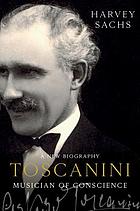 Toscanini was a top-rank conductor with an incredible memory, but I wouldn’t want to be a musician under him. He demanded the best from his musicians, and sometimes he could be extremely rude and unfair with them. On one occasion, he broke a violinist’s bow with his baton. At the same time, he recognized excellence.