Monthly Archives: March 2026


Bombers are not “counterprotesters”

Has violence become so normalized that people who throw bombs are considered mere “counterprotesters”? From the news coverage of a recent event, it appears so. US News headlined an article “Counterprotester Threw Improvised Explosive at Anti-Islam Event in NYC, Police Say.” The article was from AP and appeared on many sites.

It went on: “The sparsely attended event drew a far larger group of counterdemonstrators, including one person who tossed a smoking object containing nuts, bolts, screws and a ‘hobby fuse’ into the crowd, police said.” The article repeatedly uses the words “counterprotesters” and “counterdmonstrators,” making it sound as if the whole body of counterdemonstrators was bent on violent destruction.

What actually was happening was that a small group held a “Stop the Islamic Takeover of New York City” rally in front of Gracie Mansion, where Mayor Mamdani lives, and a larger group was demonstrating against the rally. The first group was clearly bigoted, but I can’t find any indication that either group was violent. The only violence I’ve seen mentioned was from the two bomb-throwers who embedded themselves in the crowd.

Update: A second AP article continues to refer to the would-be mass murderers as “counterprotesters.” A post by Mother Jones on Bluesky also calls them “counterprotesters.”

A tweet by CNN, which seemed to say the suspects were minding their own business when they were inexplicably arrested, has gotten more attention, but the “counterprotester” story is worse. By trivializing the attack, it makes the actual counterdemonstrators seem like a terrorist mob.

If protest and terrorism are the same thing, that cuts both ways. The federal government has reportedly charged eight people with “material support for terrorism,” said terrorist support consisting of wearing “black bloc” clothes to a protest. When you accept an equivalence, you accept all that it implies.

While it’s not directly relevant, I should remind readers that Islamic State and Iran are on opposite sides of Islam’s great religious divide, so it’s unlikely that these bombers were working for Iran.

Update: One more. The headline “Bombs Near Gracie Mansion Spark Charges Against Counter-Protesters” makes it sound as if people were arrested for merely protesting. The body of the article calls them “counter-protesters” five times.

Reclaiming liberalism, revisited

The words “liberal” and “liberty” look similar, and they come from a common root. At one time, the word referred to the advocacy of liberty. In the middle of the twentieth century, particularly in the USA, it took on a different meaning, advocacy of government as the solution to everything. The pendulum is swinging, back, though. As I noted in my earlier post on “reclaiming liberalism,” advocates of liberty and justice under law are being attacked as “liberals.” Meanwhile, the government-solves-everything bunch now prefers to call itself “progressive.” They’re vague on what they’re progressing toward.

I’m bringing this up again because the Institute for Humane Studies has launched an exciting new website, Liberalism.org. Many of the names on it will be familiar to advocates of liberty: Jason Kuznicki, Aaron Ross Powell, Radley Balko, Ilya Somin, Sarah Skwire, and others. And they pay for articles! I need to look into that. Their choosing to label the site liberal rather than libertarian is significant. While there are still overtly libertarian individuals and organizations fighting a good fight, the Libertarian Party has damaged the name by accommodating populists. It’s time to say that we, not the Democratic Party, are the real liberals.


Gagging social media in Methuen 4

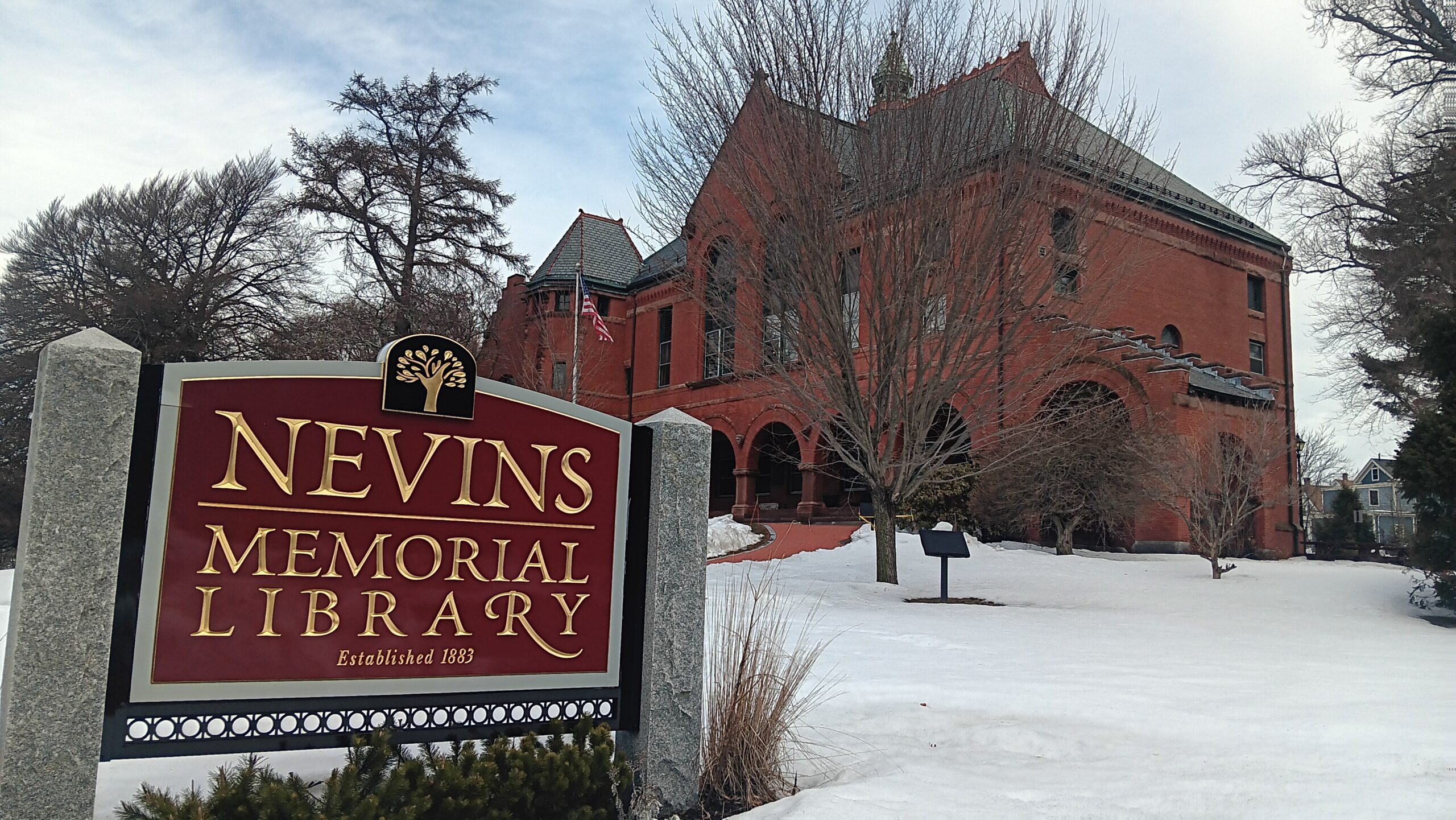
The city of Methuen, Massachusetts, has adopted a resolution to restrict access to social media on city-owned devices. The announcement states that “City-owned devices and networks in City buildings and City-run youth programs will limit access to social media for minors under 16 whenever feasible.” This would clearly apply to Methuen’s Nevins Library, which provides computers for public use.

The statement has the tone of fanaticism that’s gone so far over the edge that it doesn’t even require yelling; of course every reasonable person will agree with it, won’t you? It’s FOR THE CHILDREN! The council favorably cites Australia’s total ban on use of social media by anyone under 16. The statement expresses hope for nationwide restrictions: “The Council also formally endorsed Mayor Beauregard’s commitment to advocate for state and federal policies that restrict social media access for children under 16 and strengthen youth digital safety protections nationwide.”

It’s the familiar idea that libraries should reject or restrict access to anything deemed “harmful to minors,” where “harmful” has a very broad definition. It’s the same mindset that demands they keep all books on certain topics away from kids’ eyes.

Nevins Memorial Library, Methuen, Mass.On Saturday I went to tne Nevins Library to find out how it’s going to be affected. The people working there said they hadn’t received any direct communication, even though the impact will fall most heavily on them. They don’t know what’s going to be expected of them.

The term “social media” can encompass any Internet service that enables public conversation. Restrictions on using social media are restrictions on discussion. Sometimes these discussions are vitally important to young people, especially if they’re dealing with domestic abuse or have issues they’re afraid to raise with their parents. They can help to get information for personal or educational reasons, and often people make friends from distant places and different cultures.

A lot of basic information is found on social media. YouTube is generally considered a social media site; anyone can upload videos, and most of them are open for comments. Many businesses use their Facebook page as their main Internet presence. Telling kids they can’t use these sites or subjecting them to heavy restrictions will cut them off from a lot of information.

The present situation is reminiscent of panics in which kids had to be “protected” from novels, comic books, rock’n’roll, TV, and video games. Who will protect us from the protectors?


A murder cult

In November, I wrote about people who advocate assaulting people they call Nazis. Bad as they are, they aren’t in the same league as people whose political views include endorsement of murder. This group is on the fringe, but it needs to be strongly repudiated.

A report that caught my attention recently says that “The man who allegedly opened fire at a country club in Nashua, N.H., last fall, killing a restaurant patron and wounding two other people, later confessed to the shooting and told investigators he wanted to kill the rich.” Many people on the left admire Luigi Mangione, who has been charged with killing insurance executive Brian Thompson in cold blood. Posts on social media express enthusiasm for France’s Reign of Terror, in which about 17,000 people were executed. The Chicago Teachers Union posted on pre-Musk Twitter applauding a death threat in the form of a mock guillotine.

I didn’t see much outright celebration of Charlie Kirk’s death, but the outburst of hatred following his death was far out of proportion to his views and inappropriate to the occasion. Last September, I posted about one aspect of that reaction.

These are people who believe individual human lives have no significance. If they can improve “society” by eliminating some of its members, they’re all for it. In previous generations, people with similar views cheered the killing of millions by Stalin and Mao.

These people have the right to express their views, so long as they aren’t directly threatening people. What they don’t have is the right to be considered anything better than human dirt. Teachers who applaud guillotines should be pariahs in educational communities. Talk show audiences who cheer for Mangione should be kicked out of the studio. People who post to social media advocating a new Reign of Terror should have their accounts suspended. People who believe in human rights in any form should make it clear they have nothing to do with admirers of murder.


Gugusse et l’Automate: Rediscovery of the first robot film

If you’ve seen the movie Hugo (and you should), you remember the wonderful scene where a humanoid automaton is restored and goes into action, revealing an important secret. Georges Méliès found these machines fascinating. His 1897 Gugusse et l’Automate presents an automaton (played by an actor) in what has been called the world’s first film about a robot. Bill McFarland brought a box of old films from Grand Rapids, Michigan to the National Audio-Visual Conservation Center in Virginia, and one of them was a third-generation copy of Gugusse. Film historians had known it existed, but no one now living had seen it. The preservation experts digitized the one-minute film, which I’m sure must have been fragile, and it’s now available freely on YouTube and other sites.

Here’s a link to the video on the LOC site. I’ve edited this post to link rather than embed, since the embed wasn’t always working.