Internet


Reclaiming liberalism, revisited

The words “liberal” and “liberty” look similar, and they come from a common root. At one time, the word referred to the advocacy of liberty. In the middle of the twentieth century, particularly in the USA, it took on a different meaning, advocacy of government as the solution to everything. The pendulum is swinging, back, though. As I noted in my earlier post on “reclaiming liberalism,” advocates of liberty and justice under law are being attacked as “liberals.” Meanwhile, the government-solves-everything bunch now prefers to call itself “progressive.” They’re vague on what they’re progressing toward.

I’m bringing this up again because the Institute for Humane Studies has launched an exciting new website, Liberalism.org. Many of the names on it will be familiar to advocates of liberty: Jason Kuznicki, Aaron Ross Powell, Radley Balko, Ilya Somin, Sarah Skwire, and others. And they pay for articles! I need to look into that. Their choosing to label the site liberal rather than libertarian is significant. While there are still overtly libertarian individuals and organizations fighting a good fight, the Libertarian Party has damaged the name by accommodating populists. It’s time to say that we, not the Democratic Party, are the real liberals.

Gagging social media in Methuen 4

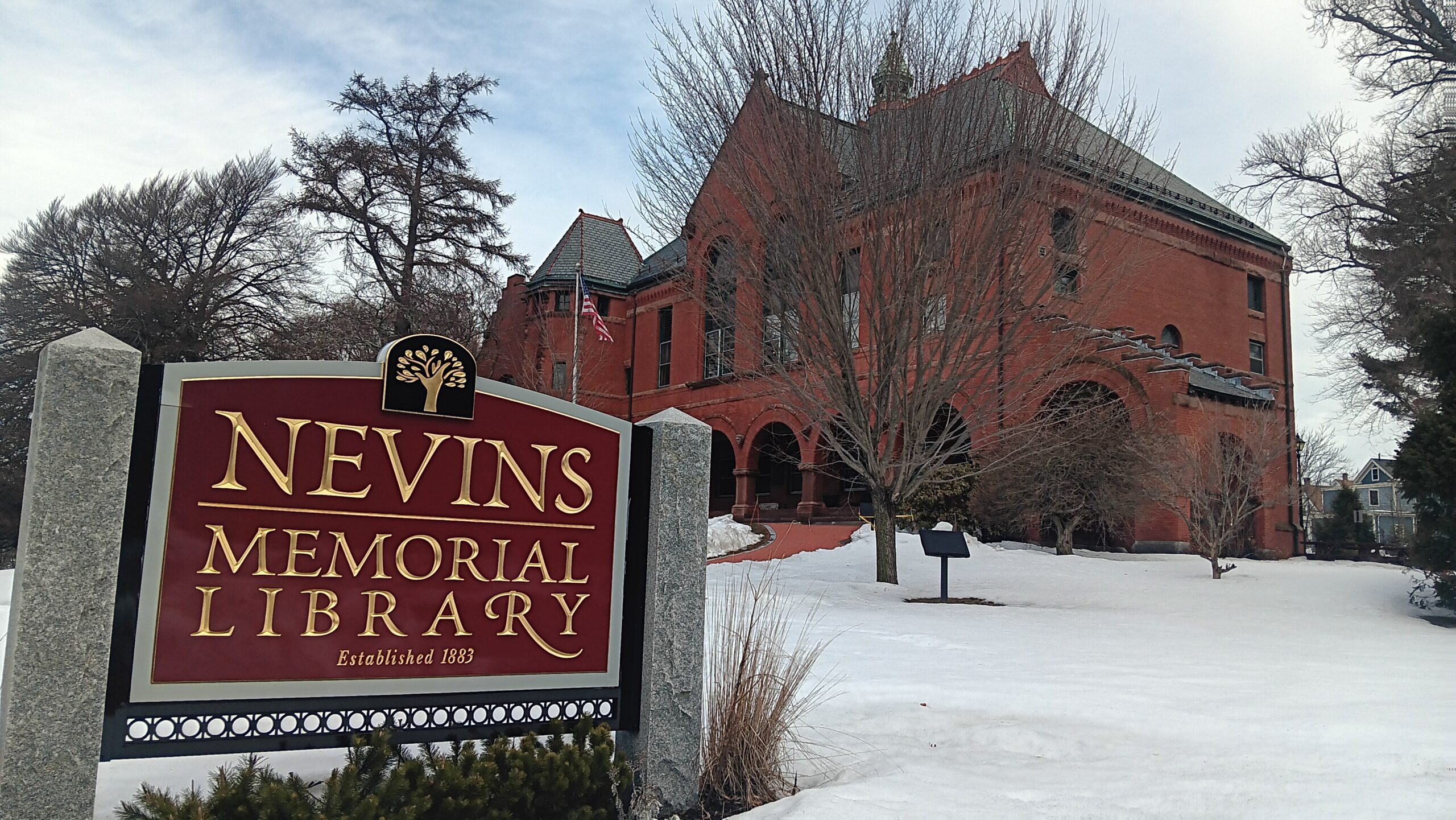
The city of Methuen, Massachusetts, has adopted a resolution to restrict access to social media on city-owned devices. The announcement states that “City-owned devices and networks in City buildings and City-run youth programs will limit access to social media for minors under 16 whenever feasible.” This would clearly apply to Methuen’s Nevins Library, which provides computers for public use.

The statement has the tone of fanaticism that’s gone so far over the edge that it doesn’t even require yelling; of course every reasonable person will agree with it, won’t you? It’s FOR THE CHILDREN! The council favorably cites Australia’s total ban on use of social media by anyone under 16. The statement expresses hope for nationwide restrictions: “The Council also formally endorsed Mayor Beauregard’s commitment to advocate for state and federal policies that restrict social media access for children under 16 and strengthen youth digital safety protections nationwide.”

It’s the familiar idea that libraries should reject or restrict access to anything deemed “harmful to minors,” where “harmful” has a very broad definition. It’s the same mindset that demands they keep all books on certain topics away from kids’ eyes.

Nevins Memorial Library, Methuen, Mass.On Saturday I went to tne Nevins Library to find out how it’s going to be affected. The people working there said they hadn’t received any direct communication, even though the impact will fall most heavily on them. They don’t know what’s going to be expected of them.

The term “social media” can encompass any Internet service that enables public conversation. Restrictions on using social media are restrictions on discussion. Sometimes these discussions are vitally important to young people, especially if they’re dealing with domestic abuse or have issues they’re afraid to raise with their parents. They can help to get information for personal or educational reasons, and often people make friends from distant places and different cultures.

A lot of basic information is found on social media. YouTube is generally considered a social media site; anyone can upload videos, and most of them are open for comments. Many businesses use their Facebook page as their main Internet presence. Telling kids they can’t use these sites or subjecting them to heavy restrictions will cut them off from a lot of information.

The present situation is reminiscent of panics in which kids had to be “protected” from novels, comic books, rock’n’roll, TV, and video games. Who will protect us from the protectors?


Thoughts on the four dark laws of engagement

Derek Thompson has listed four “dark laws of online engagement” that explain a lot of what’s wrong with social media, and perhaps a significant part of what’s wrong with America. He discusses their effect on people, especially young men, who are socially isolated. I’d like to look at the way they distort the information that we get on the Internet.
(more…)


News sites yield to Trump 1

Donald Trump claimed: “Tina is sitting in a Colorado prison for the ‘crime’ of demanding Honest Elections. Today I am granting Tina a full Pardon for her attempts to expose Voter Fraud in the Rigged 2020 Presidential Election.” In fact, he has no power to pardon Tina Peters, since she was convicted under state law. His claim is an illegal usurpation of power.

The news media have a long tradition of yielding to sitting presidents, and they’re doing it again.
(more…)