music


My setting of Yeats’ “The Second Coming”

I’ve written and recorded a musical setting of Yeats’ “The Second Coming.” It’s one of the most ambitious compositions I’ve done, and it pushes my vocal abilities, but I think you’ll find it listenable. If you caught it when I first uploaded it, you might want to go back. Last week I remixed it to strengthen the vocal line a little and fix a bad note.

Yeats uses the word “gyre” in a personally specific way. It’s only loosely like Lewis Carroll’s “gyre and gimble.”

About a year ago, I posted some thoughts on the poem. I still stand by them.


A note on Fanny Mendelssohn

Fanny Mendelssohn, also known by her married name Fanny Hensel, was a sister of the 19th-century composer Felix Mendelssohn. While she wasn’t nearly as famous as her brother, she was an excellent composer herself, and she doubtless would have been better known if 19th-century European society didn’t discourage women from professionally writing music. The website HenselPushers is devoted to publicizing her music and making it available in printed form. The site maintainer’s name isn’t given, but it’s been going for quite a while and appears reliable.

A recent article pointed out a common mistranslation of a statement by her father, Abraham Mendelssohn. Her biographer, R. Larry Todd, translated a sentence in a letter from Abraham to the 14-year-old Fanny as: “Music will perhaps become his [Felix’s] profession, whilst for you it can and must only be an ornament, never the root of your being and doing.” That sounds as if he was discouraging her from making music important in her life.

The actual quote, according to HenselPushers, is “Die Musik wird für ihn vielleicht Beruf, während sie für dich stets nur Zierde, immer Bildungsmittel, Grundbaß deines Seins und Thuns werden kann und soll.” The usual quotation has “niemals” (never) rather than “immer” (always), reversing the meaning, and omits “Bildungsmittel” (means of personal development). He recognized that the chances of her becoming a professional musician were slim at best, but he still regarded music as very important to her future.

This is just a short signal boost, so I won’t get into the reasons for the misquote, which HenselPushers thinks was an intentional alteration by her son Sebastian Hensel. I haven’t independently verified the analysis, but the translation of the German lines looks right to the best of my understanding. “Grundbaß” (spelled “Grundbass” today) means the “ground bass” or bass line of a piece of music; if it had a secondary meaning in the Mendelssohns’ time, it’s dropped out today. Abraham was using the word metaphorically.

Fanny is believed to have contributed to some of the compositions Felix published in his own name, though we’ll never know the exact extent.

Here’s a sampling of three of Fanny Mendelssohn’s Songs Without Words.


Ona Judge

On Saturday, May 23, at 2 PM, a mural of Ona Judge will be unveiled at 222 Court Street in Portsmouth, New Hampshire. I would have missed it except for someone passing on the news yesterday evening. It’s supposedly historically accurate, and it will be a good addition to Portsmouth’s many historical sights. I like to think of her as one of the first Free Staters.

In looking for information about her and the event, I learned that today, May 21, is Ona Judge Day in Philadelphia. So that’s two reasons for quickly throwing together a post this morning.

I should also mention my song about her, “Washington’s Slave”, which is on Bandcamp as part of my album, The Road to Freedom.


Upcoming silent film: D. W. Griffith’s America

On June 23, I’ll be back at the Plaistow Library to accompany the silent film America, made by D. W. Griffith. It will start at 6 PM and run about 2 hours and 20 minutes. Reservations are encouraged so the library knows how many people to expect.

The show is part of the events observing the 250th anniversary of the Declaration of Independence. There will also be a presentation on the Battle of Bunker Hill on June 9, held by the Plaistow Historical Society. As I’m writing, not much information is available on it, but it should be interesting.

Griffith is famous (or infamous) for his 1915 film Birth of a Nation, which presents the Civil War and glorifies the KKK. America, released in 1924, is about the American Revolution. Both films have spectacular battle scenes and stories focusing on individuals. Both have a mix of accurate history and made-up stuff. America culminates in a made-up battle at a made-up place, but the early parts of the Revolution (Lexington, Concord, and Bunker Hill) are presented fairly accurately. The film doesn’t have the same level of racial problems as the earlier film. There is a black servant, but he isn’t mocked or caricatured (though I’m pretty sure a while actor played him). Natives who fight for the British are called “savages.” Things like that happen in century-old movies.

Poster for the film "America" (1924)The chief villain is a Tory rather than anyone from Britain. Lionel Barrymore portrays Walter Butler, a real-life Loyalist officer, as a sadistic schemer with an evil grin, which he wasn’t in reality. The British regulars are generally shown as brave soldiers. I wonder if Griffith remembered that the maker of the 1917 Spirit of ’76 got a long prison sentence for making an “anti-British” movie when Britain was our ally in World War I. It may have seemed safer to show Tories doing nasty things. Even as it was, the British Board of Film Censors banned the film.

The story of the war is intertwined with a love story; a Patriot is in love with the daughter of a man who remains loyal to Britain. Both of them prove honorable in the end.

As usual, I’ll provide original, live music for the film.


Book discussion: Toscanini: Musician of Conscience

Toscanini: Musician of Conscience was a huge reading project but worth it. It covers the long career of one of the most important orchestra conductors, the man who conducted the premiere of Pagliacci in 1892 and lived long enough to make long-playing records. He was a celebrity in Europe and the Americas and courageously stood up to Mussolini in his home country.

I must admit to skimming through parts of the book. His role in music and politics is most important to me, and I went quickly over parts dealing with his personal relations.
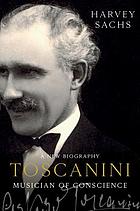
Toscanini was a top-rank conductor with an incredible memory, but I wouldn’t want to be a musician under him. He demanded the best from his musicians, and sometimes he could be extremely rude and unfair with them. On one occasion, he broke a violinist’s bow with his baton. At the same time, he recognized excellence.

In politics, if not at the podium, he was an enemy of tyranny. After a brief period of admiring Mussolini, he recognized that the would-be Duce was a brutal power-luster. In 1924 he refused an order to display Mussolini’s picture. On one occasion, when he refused to perform the Fascist anthem, a gang of Blackshirts beat him up as the police passively watched. In 1938 he left Italy and didn’t return until after World War II.

Sachs discusses his relationships with musicians who remained in Germany and Italy during the dictatorships. Withdrawing from the Bayreuth Festival was a painful decision for him. He condemned Wilhelm Furtwängler for continuing to lend his prestige to the Nazi government.

Sachs writes about an incredible number of affairs Toscanini had with women. He lets Toscanini look honorable for the most part, but I have to wonder. I didn’t see any mention of whether he ever got anyone pregnant; while he wasn’t an observant Catholic, he lived in a culture that was strongly hostile to abortion and even birth control. But as I said, I skimmed over those parts of the book, so I may have missed something.

My main complaint about the book is that its mentions of years are thin. I often had trouble figuring out in which year an event took place. That can be especially annoying if you’re using the book for reference.

This book isn’t a light weekend read, but it’s a fascinating look at an important musician and a courageous person. If you’re willing to commit the time, it’s an excellent book.