Yearly Archives: 2026


A brief history of book banning

It’s Banned Books Week, so let’s look at the history of book bans in Europe and America. Here I’m sticking to actual bans by legal force. I hope to show that while not all banned books are praiseworthy, stopping their message by prohibition seldom has good results and often opens the way for broader bans.

The first book printed in Europe with movable type was the Gutenberg Bible, issued in the 1450s. Before that, there was censorship, but the technology to mass-produce books didn’t exist. In spite of some legends, Gutenberg’s edition was never banned; it used an accepted translation of the Bible, predating the Protestant Reformation’s competing translations. However, the Church soon began prohibiting books. François Rabelais and Niccolò Machiavelli were among the first targets of Rome’s wrath. The Index Librorum Prohibitorum, first issued in 1560 and revised many times, made the practice more systematic. The Church held legal power at the time, and distributing a prohibited book could result not only in eternal damnation but in confiscation and destruction of the books as well as other penalties.

William Tyndale’s translation of the Bible into English (ca. 1526) was banned under Henry VIII and burned. Tyndale was executed in 1536 for heresy.

Some books were permitted if offending parts were “expurgated” by blacking out or tearing out. Sometimes just the author’s name was removed, because it was the author and not the contents that had offended the Church.

Banning led to the licensing of books. In effect, books were banned by default, and only authorized ones could be printed. England’s Parliament adopted this practice in the 17th century. John Milton wrote the essay “Areopagitica” in 1644 to oppose the legislation. He argued that people need to be exposed to ideas they disagree with if they’re going to have any confidence in their own views. “I cannot praise a fugitive and cloistered virtue, unexercised and unbreathed, that never sallies out and sees her adversary.” His arguments will look familiar to today’s liberal opponents of prohibition and censorship.

Milton didn’t meet with much success. The Licensing of the Press Act of 1662, designed to stop “seditious” material, banned the printing of books without a license and severely restricted imports. The printer John Twyn was executed for treason in 1664. The law lapsed in 1694.

In France in the late 16th through 18th centuries, the publication of a book required royal approval. In practice, the authority was delegated. By the 18th century, many books were printed without explicit authorization. Spain may have had the strictest book censorship of any European country. The Inquisition kept a close watch on printers and booksellers, prohibiting works that promoted non-Catholic religious ideas.

In 1637, Thomas Morton published New English Canaan in the Netherlands, which had fairly liberal laws; the copies he had brought to London were seized. It was also outlawed in Massachusetts, and it’s often said to be the first book banned in England’s American colonies.

In 1873 in the United States, the Comstock Act prohibited a broad range of “obscene” books. That included not just books that mentioned sex, but information on birth control and abortion. A series of court decisions over the next century struck down nearly all its prohibitions.

In 1973, Daniel Ellsberg released the Pentagon Papers to multiple news outlets; the document was eventually published as a book. He was prosecuted under the Espionage Act of 1917, but all charges against him were dismissed.

The Nazi government of Germany in the 1930s and 40s practiced heavy censorship, especially of any works with Jewish connections. Books were burned in public. Modern Germany still bans some kinds of books, including pro-Nazi and Holocaust denial material.

Russia had heavy book prohibition under the Communists and has returned to those levels under Putin.

In spite of all that has happened in recent years, the United States has one of the highest levels of press freedom in world history. Attempts to exclude broad categories of books from libraries are a matter of concern, but they’re small potatoes compared to what we have experienced in the past and could experience again.

This article is the product of just a couple of hours of work. Apologies for any errors.

Another call for violence in New Hampshire

New Hampshire is supposed to be a friendly state. The LPNH didn’t do much to uphold the image when it called for murdering Democratic office holders. Now we have a legislator challenging an opposing political leader to a street fight.

Ned Raynolds, a Democratic state legislator from Portsmouth, challenged Jason Osborne, the Republican majority leader in the state’s House of Representatives, to an unarmed duel in downtown Portsmouth. He wrote, “No weapons, no posse — just you & me. We’ll stop traffic, and I’ll put you on the ground and rub gravel in your face.” That’s literally the language of a schoolyard bully. There seems to have been worse, but the Globe didn’t dare publish it, instead referring obliquely to “crude and misogynistic language” and “a vulgar phrase.” Strange, since Osborne is a man.

Democratic leader Alexis Simpson has responded, “I said it when extremists called for the assassination of Democrats last week, and I say it to members of my own caucus who propose fistfights. Violent rhetoric has no place in our politics.”

Raynolds isn’t running for reelection but has refused calls to resign.


On accompanying silent movies 2

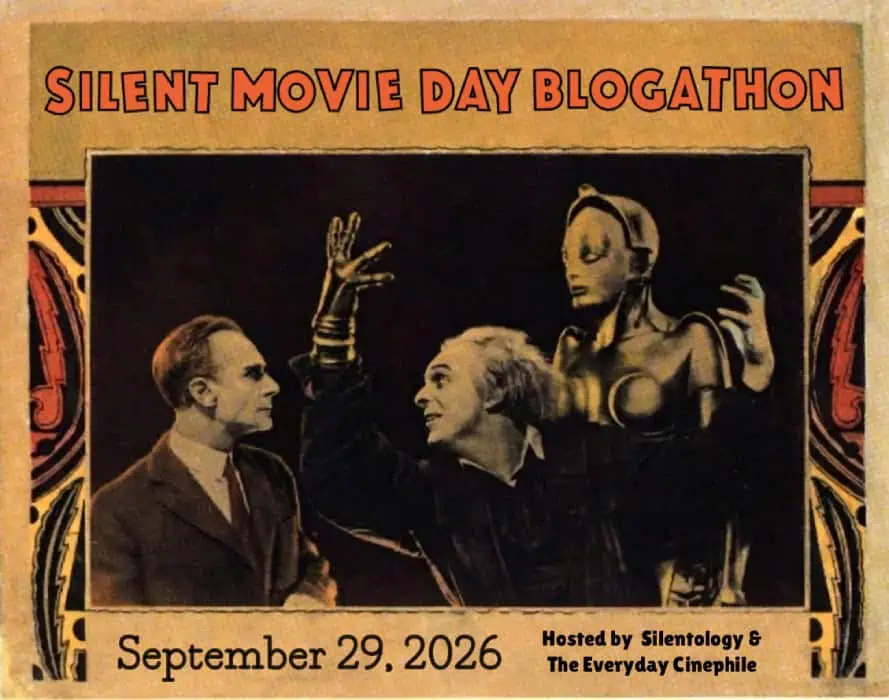
Oops — Silent Movie Day is tomorrow as I’m typing these words, there’s a blogathon coming, and I should write something! Here are some words about what I’ve learned in accompanying silent films.

The best accompanists have busy schedules, and they accompany several different movies each month if not each week, traveling a lot. I just accompany occasional movies within an easy drive from my home. But this gives me a chance to learn each movie in depth, to know every event and every surprise. This lets me get my timing as close to perfect as I can and develop thematic ideas to fit the situation. I’ve been complimented on my timing more than any other aspect of my playing.

This doesn’t mean I should punctuate every surprise and gag with a musical cue. That’s called “Mickey Mousing,” and good accompanists frown on doing too much of it. It’s OK or even necessary with physical comedy and early cartoons, but it’s the wrong approach when the story and characters are more important. Normally, the accompaniment shouldn’t call attention to itself. It should enhance the movie rather than trying to narrate it.

Sometimes the accompanist can create appropriate sound effects, using an electronic keyboard or equipment picked for the show; that’s not the same as Mickey Mousing. For D. W. Griffith’s America this summer, I provided hundreds of gunshots from my keyboard. Some accompanists bring bells or noisemakers when they fit the movie.

The ideal is for the music to feel like a part of the film. It should increase the audience’s immersion in what’s happening on the screen. Think of how a John Williams score works with a modern movie. Occasionally the music will grab your attention; storm troopers gather to the tune of the Imperial March, or a shark approaches as two alternating notes build in power. Most of the time, though, your focus is on what’s happening. The music is there, and the scene wouldn’t be nearly as effective without it, but it’s not what you’re thinking about.

Music in silent movies comes closer to the foreground, since it isn’t competing with spoken dialogue or sound effects. It’s usually continuous, while modern movies have many scenes without accompaniment. This allows more opportunities to build the film into a musical whole, but subtlety is essential.

I learn more with each movie I accompany. Here’s a list of what I’ve accompanied and what I’m scheduled to accompany.

Note: I’ve changed the blogathon links in this post to point at the more complete list on The Everyday Cinephile. You need to scroll down a little to see the list of participating posts.

Scene from the silent film Metropolis with text: Silent Movie Day Blogathon / September 29, 2026


SUBSCRIBE

Enter your email address to subscribe and get notifications of new posts by email.


LPNH advocates mass murder 2

The “Libertarian” Party of New Hampshire has posted on Xitter: “We openly support the assassination of basically every elected Democrat in New Hampshire / But if you don’t have the balls to do that then you should probably vote GOP.” Multiple reports have confirmed that the post appeared. It’s possible an unauthorized person got access to the LPNH account, but the organization would have said so, and it hasn’t. It’s been deleted; I don’t know whether it was removed voluntarily or not.

Whether the post breaks the law is a question for lawyers and courts; the requirements for prosecuting a threat in the US are very strict. Legal or not, it’s despicable. The LPNH is a rogue organization that’s as unlibertarian as it gets. In 2024 it posted, “Anyone who murders Kamala Harris will be an American hero.” The new post goes further, openly supporting mass murder.

The LPNH wasn’t always this way. About a decade ago, I was an officer in its Seacoast branch. A bunch of rabid authoritarians led by Jeremy Kauffman took it over and have kept their grip on it. The national LP has repudiated the New Hampshire organization and condemned the LPNH’s endorsement of murder.

The LPNH shouldn’t be confused with the Granite State Libertarian Party.

Unfortunately, some people will use the LPNH’s actions to attack libertarianism. That’s why it’s important for all who call themselves libertarians or classical liberals to condemn this gang of goons.


SUBSCRIBE

Enter your email address to subscribe and get notifications of new posts by email.


The Museum of Printing

In Haverhill, Massachusetts, less than five miles from my house, you can find the Museum of Printing. It’s crammed with typesetters, typewriters, computers, printing presses, and lots of other things. It’s open on Saturdays.
Museum of Printing

Recently I started as a volunteer. I’ve found a niche in the library, which has about 6,000 books on all aspects of printing. Its cataloguing system is a spreadsheet; eventually we may improve on it. The library doesn’t circulate, so it isn’t urgent.

When I say “library” I’m talking about the Frank Romano Library. The museum has five libraries, and so far I’ve gotten a good look at only two of them. The other three are font libraries, so they aren’t the kind where you’d sit down and enjoy a nice read.

There’s a “hologram” of Benjamin Franklin; I don’t know how long it’s going to be there. I put the word in quotes because it isn’t actually a 3-D image. It consists of images projected onto three whirling fans that aren’t coplanar. The fans are nearly invisible when running, and the resulting image looks somewhat three-dimensional when viewed from the front. Even if it isn’t a hologram, it’s unusual and eye-catching.

A personal favorite of mine is the Quadritek 1200, a phototypesetting console from the 1980s that used cassettes for data storage. I worked for Itek and wrote software for it, including parts of the data communication module.

If you’d like to see more, here’s my Flickr album from the museum.


SUBSCRIBE

Enter your email address to subscribe and get notifications of new posts by email.