Monthly Archives: March 2026


A Boston trip and a character snapshot   Recently updated !

Saturday was an excellent first day of spring. I went to listen to the Boston Bach Birthday celebration at the First Lutheran Church. They had all-day performances, mostly on the organ, and a German lunch with bratwurst and sauerkraut. The lunch was a rare opportunity; there are no German restaurants in the area. The music included two recently discovered chaconnes by Bach, maybe their first public performance in Boston. It also included group singing of some old hymns, including one from Luther’s German Mass, which is 500 years old this year. They got this atheist singing hymns in a Lutheran church. 😇

It was sunny and about 50 degrees outside. After lunch I walked through the Public Garden and Boston Common. Near Park Street Station I saw a small group protesting the US oil blockade of Cuba. A guy (let’s call him Mr. Shouter) started yelling at them. I and another man I don’t know (Mr. Talker) went over to talk to him; my aim was just to distract him from a potentially nasty confrontation. In the few minutes we were there, I got some impressions of how that kind of mind works.
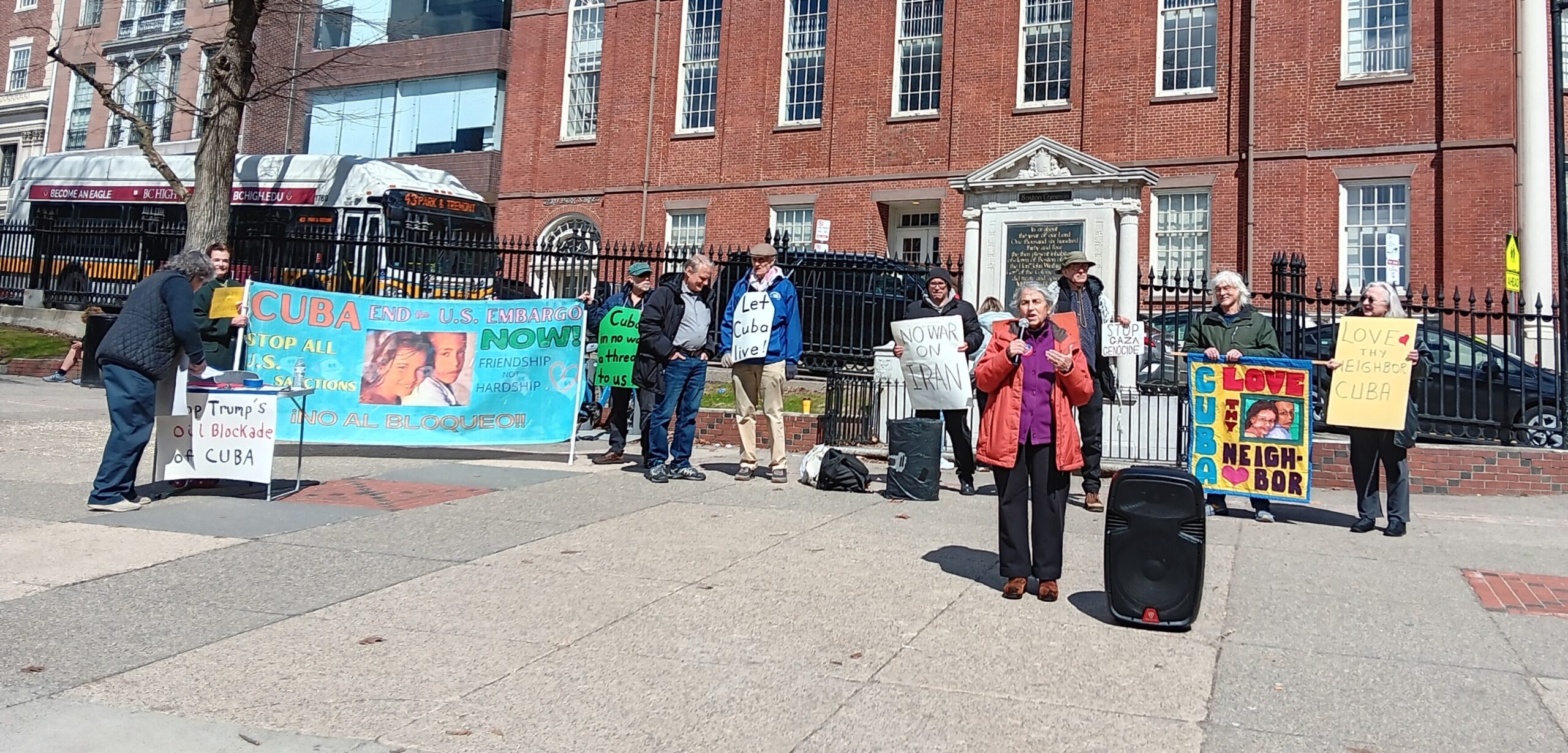
Cuba Blockade Protest, March 21, 2026, Boston CommonMr. Shouter was yelling that Cuba has a Communist government. True enough. He also yelled that dissent was impossible in Cuba because anyone who criticized the government would be shot and sent to a concentration camp. It wasn’t clear in which order. Granted, dissent in Cuba is dangerous, even if he exaggerated. I tried to tell him that a large part of that was true, but the best way to weaken Cuba’s rulers was open trade. Cuba hasn’t been a threat to the US at least since the Soviet Union collapsed. He didn’t reply to me or give me much notice; he was more interested in what Mr. Talker said. Talker told him that he had visited Cuba and that it was impossible to stop Cubans from speaking out. Shouter called him a Communist and a liar. Talker didn’t lose his temper. After a little while, I said quietly to Shouter, “If you’d stop yelling long enough to hear what others say, you might learn something,” and went down into the subway station.

We’ve all seen people like Shouter, who always yell and never listen. They’re a cliché of TV and movies, often drawing the protagonist into an unwanted fight. It isn’t other people they’re trying to keep from hearing disagreement. It’s themselves. They’re convinced the world is a certain way, but they know their certainty is built on shaky ground. If they stopped screaming, they might have to think about what they heard. He wasn’t entirely wrong. Cuba lacks freedom of speech, and maybe Talker thought they have more than they do. But Shouter saw its government as incredibly efficient in finding and stamping out every dissenting voice, like Orwell’s Big Brother. He was desperate to banish any possibility that open dissent exists in Cuba. Havana has seen several protests recently, at considerable risk to the participants, but he needs to believe that doesn’t happen.

Weird as it is, some people get satisfaction from believing their foes are all-powerful. Maybe it’s that the greater the enemy is, the greater the victory will be. It’s a literally apocalyptic way of thinking, straight out of the Book of Revelation.

Hopefully Talker and I helped to avoid a nasty scene. I didn’t see anything about the Cuba protesters in the news, which likely means nothing newsworthy happened.

Travel advisory

A special note for today: Trump is deploying ICE to airports. If you have a scheduled flight that isn’t strictly necessary, seriously consider cancelling. Somalis will be targeted; if you have any connection to Somalia, cancel the flight unless it’s a matter of life or death. If you must fly, don’t make an idiot of yourself. Find a way to get where you’re going without exposing yourself to more risk than necessary.
Book discussion: It Can’t Happen Here   Recently updated !

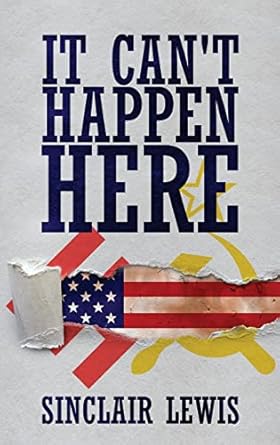
Sinclair Lewis’s novel of an American dictatorship, It Can’t Happen Here, seems even more timely today than when it was published in 1935. It tells of the election of Buzz Windrip as president, his seizure of absolute power, and how it affects people.

Cover of It Can't Happen Here by Sinclair LewisWindrip is so Trump-like you might think Lewis had a crystal ball looking into our present. He aims for total control while posturing as an ordinary, unassuming person. His platform is incoherent, laced with bigotry while appealing to the “Forgotten Man.” His Cabinet selections are based on personal loyalty. He has a personal police force, the “Minute Men,” to intimidate his critics. He even has an advisor who is smarter and more ruthless than he is.

What make’s Windrip’s success possible is the complacency and indifference of the American people. As he plainly says he’s going to reduce Congress to an advisory capacity, people think he’s just going to fix the country up. The novel’s main focus isn’t on the centers of power but on Doremus Jessup, the publisher of a small Vermont newspaper who’s trying to make sense of it all. This lets Lewis show how people react to Windrip before and after his takeover. Once he’s in office, he immediately suppresses the legislative and judicial branches, which give him no further trouble.

Lewis had seen what had happened in twentieth-century Russia, Germany, and Italy. He knew the USA wasn’t immune. Reading the novel gives a better understanding of what’s happening — and what could happen — today.


Bombers are not “counterprotesters”   Recently updated !

Has violence become so normalized that people who throw bombs are considered mere “counterprotesters”? From the news coverage of a recent event, it appears so. US News headlined an article “Counterprotester Threw Improvised Explosive at Anti-Islam Event in NYC, Police Say.” The article was from AP and appeared on many sites.

It went on: “The sparsely attended event drew a far larger group of counterdemonstrators, including one person who tossed a smoking object containing nuts, bolts, screws and a ‘hobby fuse’ into the crowd, police said.” The article repeatedly uses the words “counterprotesters” and “counterdmonstrators,” making it sound as if the whole body of counterdemonstrators was bent on violent destruction.

What actually was happening was that a small group held a “Stop the Islamic Takeover of New York City” rally in front of Gracie Mansion, where Mayor Mamdani lives, and a larger group was demonstrating against the rally. The first group was clearly bigoted, but I can’t find any indication that either group was violent. The only violence I’ve seen mentioned was from the two bomb-throwers who embedded themselves in the crowd.

Update: A second AP article continues to refer to the would-be mass murderers as “counterprotesters.” A post by Mother Jones on Bluesky also calls them “counterprotesters.”

A tweet by CNN, which seemed to say the suspects were minding their own business when they were inexplicably arrested, has gotten more attention, but the “counterprotester” story is worse. By trivializing the attack, it makes the actual counterdemonstrators seem like a terrorist mob.

If protest and terrorism are the same thing, that cuts both ways. The federal government has reportedly charged eight people with “material support for terrorism,” said terrorist support consisting of wearing “black bloc” clothes to a protest. When you accept an equivalence, you accept all that it implies.

While it’s not directly relevant, I should remind readers that Islamic State and Iran are on opposite sides of Islam’s great religious divide, so it’s unlikely that these bombers were working for Iran.

Update: One more. The headline “Bombs Near Gracie Mansion Spark Charges Against Counter-Protesters” makes it sound as if people were arrested for merely protesting. The body of the article calls them “counter-protesters” five times.


Reclaiming liberalism, revisited

The words “liberal” and “liberty” look similar, and they come from a common root. At one time, the word referred to the advocacy of liberty. In the middle of the twentieth century, particularly in the USA, it took on a different meaning, advocacy of government as the solution to everything. The pendulum is swinging, back, though. As I noted in my earlier post on “reclaiming liberalism,” advocates of liberty and justice under law are being attacked as “liberals.” Meanwhile, the government-solves-everything bunch now prefers to call itself “progressive.” They’re vague on what they’re progressing toward.

I’m bringing this up again because the Institute for Humane Studies has launched an exciting new website, Liberalism.org. Many of the names on it will be familiar to advocates of liberty: Jason Kuznicki, Aaron Ross Powell, Radley Balko, Ilya Somin, Sarah Skwire, and others. And they pay for articles! I need to look into that. Their choosing to label the site liberal rather than libertarian is significant. While there are still overtly libertarian individuals and organizations fighting a good fight, the Libertarian Party has damaged the name by accommodating populists. It’s time to say that we, not the Democratic Party, are the real liberals.


Gagging social media in Methuen 4

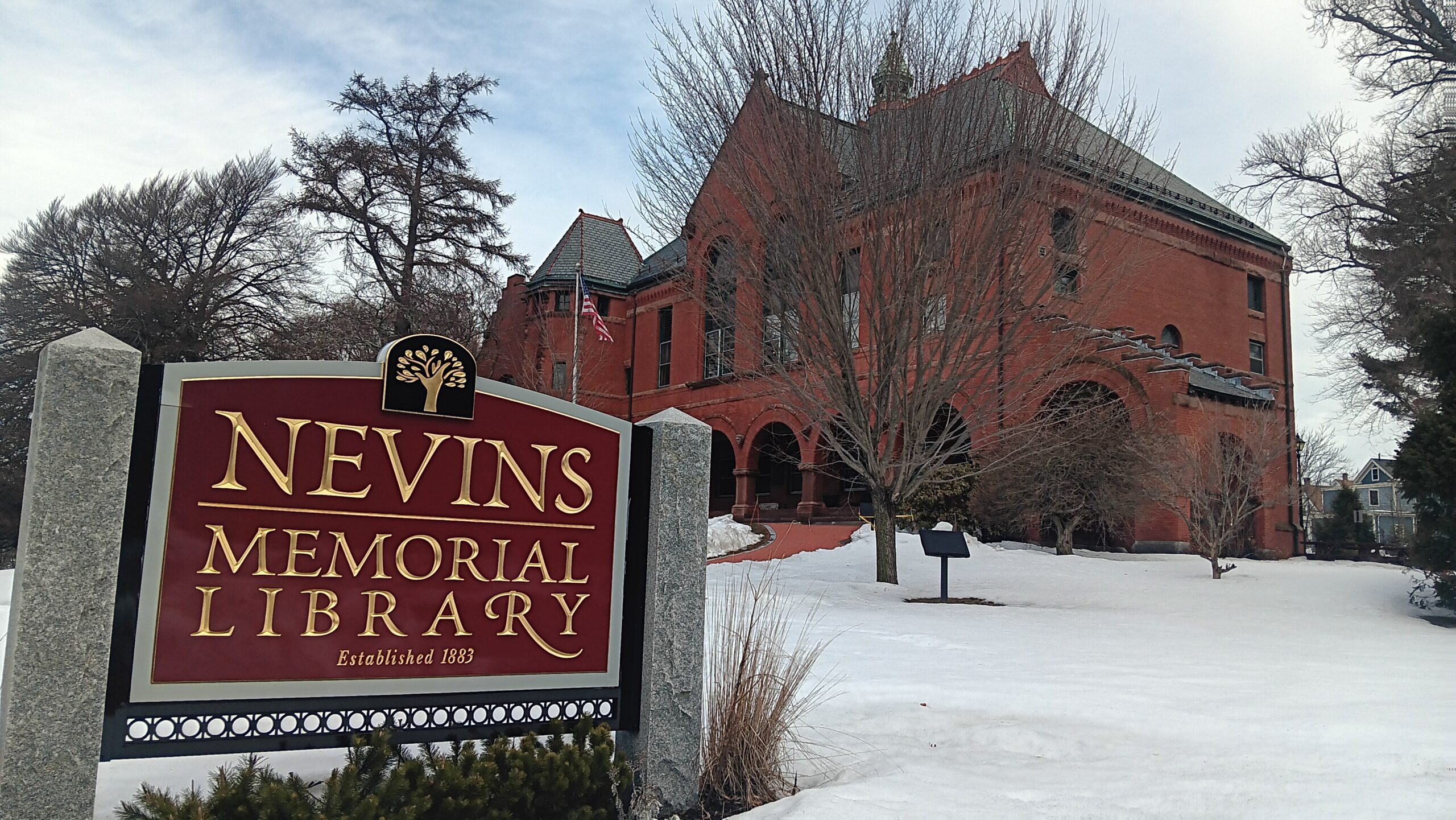
The city of Methuen, Massachusetts, has adopted a resolution to restrict access to social media on city-owned devices. The announcement states that “City-owned devices and networks in City buildings and City-run youth programs will limit access to social media for minors under 16 whenever feasible.” This would clearly apply to Methuen’s Nevins Library, which provides computers for public use.

The statement has the tone of fanaticism that’s gone so far over the edge that it doesn’t even require yelling; of course every reasonable person will agree with it, won’t you? It’s FOR THE CHILDREN! The council favorably cites Australia’s total ban on use of social media by anyone under 16. The statement expresses hope for nationwide restrictions: “The Council also formally endorsed Mayor Beauregard’s commitment to advocate for state and federal policies that restrict social media access for children under 16 and strengthen youth digital safety protections nationwide.”

It’s the familiar idea that libraries should reject or restrict access to anything deemed “harmful to minors,” where “harmful” has a very broad definition. It’s the same mindset that demands they keep all books on certain topics away from kids’ eyes.

Nevins Memorial Library, Methuen, Mass.On Saturday I went to tne Nevins Library to find out how it’s going to be affected. The people working there said they hadn’t received any direct communication, even though the impact will fall most heavily on them. They don’t know what’s going to be expected of them.

The term “social media” can encompass any Internet service that enables public conversation. Restrictions on using social media are restrictions on discussion. Sometimes these discussions are vitally important to young people, especially if they’re dealing with domestic abuse or have issues they’re afraid to raise with their parents. They can help to get information for personal or educational reasons, and often people make friends from distant places and different cultures.

A lot of basic information is found on social media. YouTube is generally considered a social media site; anyone can upload videos, and most of them are open for comments. Many businesses use their Facebook page as their main Internet presence. Telling kids they can’t use these sites or subjecting them to heavy restrictions will cut them off from a lot of information.

The present situation is reminiscent of panics in which kids had to be “protected” from novels, comic books, rock’n’roll, TV, and video games. Who will protect us from the protectors?