Reclaiming liberalism, revisited
The words “liberal” and “liberty” look similar, and they come from a common root. At one time, the word referred to the advocacy of liberty. In the middle of the twentieth century, particularly in the USA, it took on a different meaning, advocacy of government as the solution to everything. The pendulum is swinging, back, though. As I noted in my earlier post on “reclaiming liberalism,” advocates of liberty and justice under law are being attacked as “liberals.” Meanwhile, the government-solves-everything bunch now prefers to call itself “progressive.” They’re vague on what they’re progressing toward.
I’m bringing this up again because the Institute for Humane Studies has launched an exciting new website, Liberalism.org. Many of the names on it will be familiar to advocates of liberty: Jason Kuznicki, Aaron Ross Powell, Radley Balko, Ilya Somin, Sarah Skwire, and others. And they pay for articles! I need to look into that. Their choosing to label the site liberal rather than libertarian is significant. While there are still overtly libertarian individuals and organizations fighting a good fight, the Libertarian Party has damaged the name by accommodating populists. It’s time to say that we, not the Democratic Party, are the real liberals.
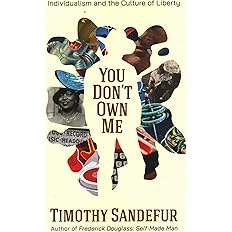 The cover art looks like jigsaw pieces that don’t obviously fit together, which could also describe the book. It’s a series of loosely connected essays. The second one is the text of a speech, which with a little editing would have fitted better into the book. Some of the sections are quite good. “Zora Neale Hurston, Undefeated” makes me want to learn more about that author. On the other hand, “Anarchy, State, and Zombie Dystopia,” a discussion of The Walking Dead, left me confused because he assumes the reader is already familiar with it. Someone not as obsessively familiar as me with Star Trek might say the same of “Navigating by Fixed Stars: The Moral Trajectory of Star Trek.”