Book discussion


Book Discussion: Tech Panic

Robby Soave is making a name for himself among the younger generation of libertarian journalists. His Tech Panic addresses many of the overblown concerns and bad recommendations about social media. The attacks come from both the right and the left, and they’re disturbingly similar even though the two sides hate each other. They’re often attacks on free speech as such. Tech Panic cover

I should mention that I don’t like the big social media platforms very much. Rather than go off on a major rant, I’ll just leave it at that. I make minimal use of Facebook and have given up on Twitter, and I’m not biased in their favor.

Politicians often demand the repeal of Section 230 of the Communications Decency Act. The bulk of the CDA was declared unconstitutional, but Section 230 remains as protection for hosting companies and their users. It says, basically, that websites aren’t responsible for user-posted content. There are some exceptions; for instance, hosts have to take down child porn as fast as they can. But if a user violates a copyright or libels a person, the liability falls on the user, not the host.
(more…)


Power and royalty in Lord of the Rings

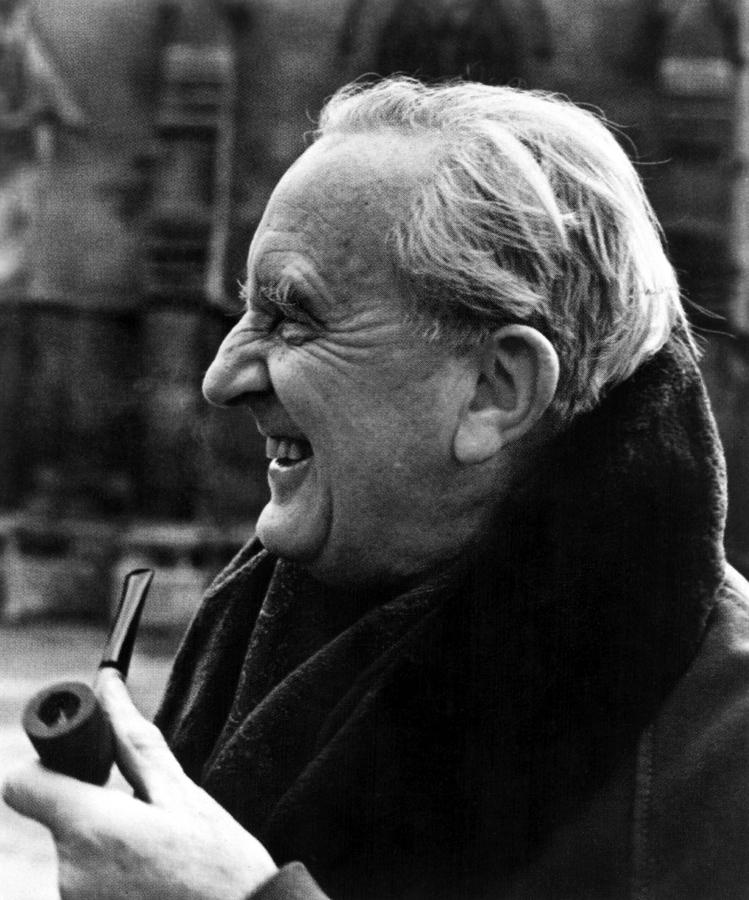
J.R.R. Tolkien A major theme of Lord of the Rings is that power corrupts. It’s impossible to miss. The Ring represents the power to subjugate, conquer, and destroy. Sauron made it for that purpose. It has a magical aura that causes people who stay near it for long to want to possess and use it. It controls people more than they control it. Only Sauron can fully control the Ring.

Hobbits vs. authoritarianism

However, it doesn’t influence everyone equally. Hobbits are, with one major exception, less susceptible. Sam shows little interest in it, taking it only when he has to and returning it to Frodo with relative ease. It’s a huge burden on Frodo, but he doesn’t succumb to it until he reaches Mount Doom and faces the decision to destroy it. Merry and Pippin have no interest in acquiring it.
(more…)


Book discussion: Enlightenment Now

Is the world going to hell? Are we all doomed? Steven Pinker has consistently argued that not only is this view mistaken, the long-term trends of the world show steady improvement in human well-being. Enlightenment Now: The Case for Reason, Science, Humanism, and Progress provides many specifics in support of this position.

Englightenment Now coverAlarm and disasters sell in the news media. People want to appear serious by citing problems rather than progress. Organizations looking to raise money or get people involved focus on what needs fixing. Taken together, they can create the impression that only terrible things are happening and they’re getting worse.
(more…)


Book review: For Faith and Freedom: A Short History of Unitarianism in Europe

Cover, For Faith and FreedomThe title of this blog post includes the subtitle, because otherwise the book title sounds like a conservative political treatise. Charles Howe’s For Faith and Freedom is part of my growing research collection for the Thomas Lorenz novels. Before reading it, I was worried that Frieda might be unrealistically advanced in her views for the 16th century. After reading the accounts in this book, I understand better that it was entirely possible to launch a full-scale attack on the Christian orthodoxies of the day. You just had to take into account the likelihood of being denounced, physically attacked, arrested, imprisoned, tortured, and burned alive.
(more…)


Book review: Retaking College Hill

Walter Donway
Retaking College Hill: The Adults Are Back
Paperback or e-book, Amazon.com

Cover, Retaking College HillRetaking College Hill is a novel of both action and ideas. It deals with a topic which is an excellent source of dramatic conflict but hasn’t been used in literature as much as it should. That topic is the battle for academic freedom, for making universities a place for teaching and controversy without fear of retaliation.
(more…)