The city of Methuen, Massachusetts, has adopted a resolution to restrict access to social media on city-owned devices. The announcement states that “City-owned devices and networks in City buildings and City-run youth programs will limit access to social media for minors under 16 whenever feasible.” This would clearly apply to Methuen’s Nevins Library, which provides computers for public use.
The statement has the tone of fanaticism that’s gone so far over the edge that it doesn’t even require yelling; of course every reasonable person will agree with it, won’t you? It’s FOR THE CHILDREN! The council favorably cites Australia’s total ban on use of social media by anyone under 16. The statement expresses hope for nationwide restrictions: “The Council also formally endorsed Mayor Beauregard’s commitment to advocate for state and federal policies that restrict social media access for children under 16 and strengthen youth digital safety protections nationwide.”
It’s the familiar idea that libraries should reject or restrict access to anything deemed “harmful to minors,” where “harmful” has a very broad definition. It’s the same mindset that demands they keep all books on certain topics away from kids’ eyes.
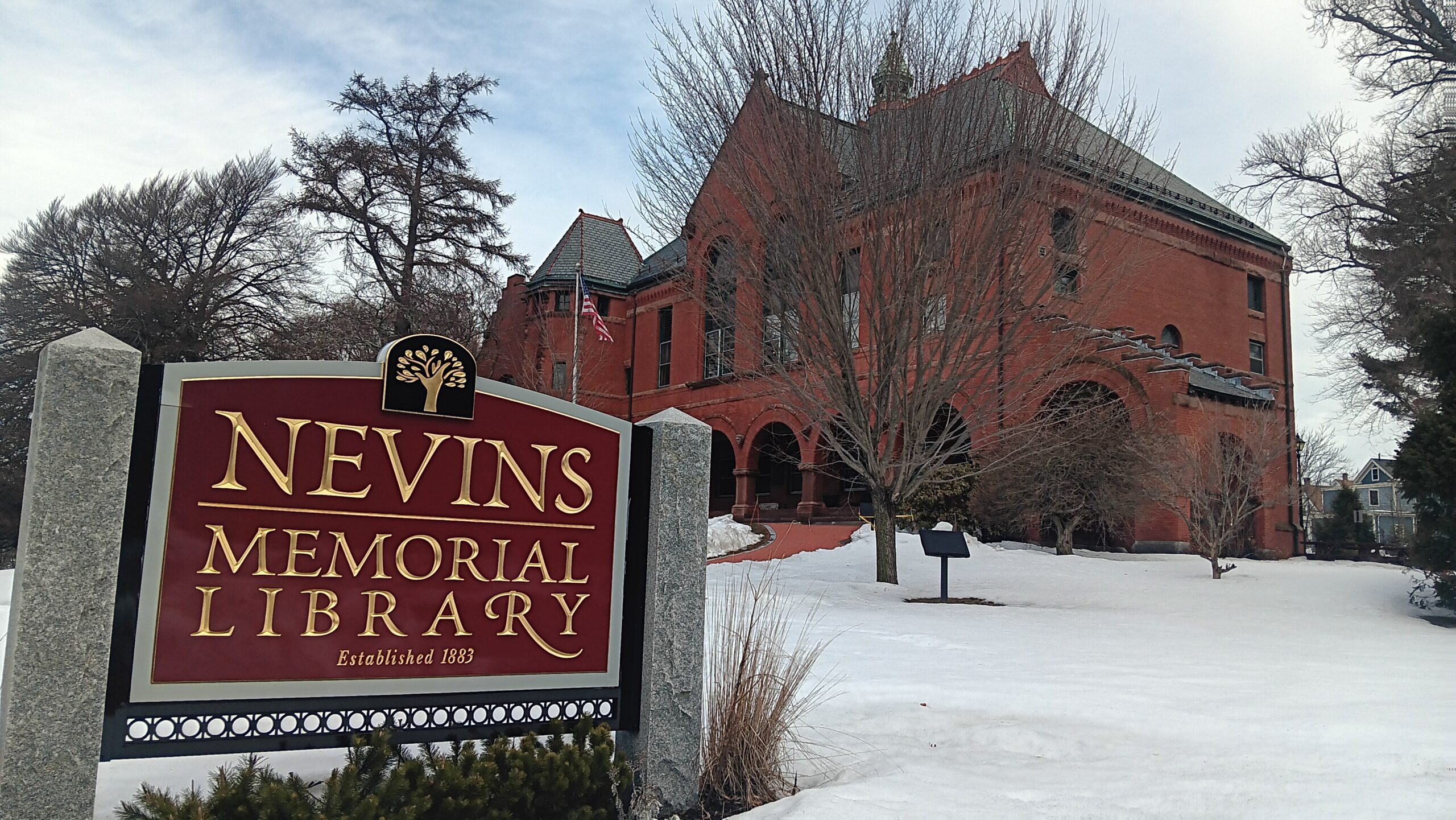 On Saturday I went to tne Nevins Library to find out how it’s going to be affected. The people working there said they hadn’t received any direct communication, even though the impact will fall most heavily on them. They don’t know what’s going to be expected of them.
The term “social media” can encompass any Internet service that enables public conversation. Restrictions on using social media are restrictions on discussion. Sometimes these discussions are vitally important to young people, especially if they’re dealing with domestic abuse or have issues they’re afraid to raise with their parents. They can help to get information for personal or educational reasons, and often people make friends from distant places and different cultures.
A lot of basic information is found on social media. YouTube is generally considered a social media site; anyone can upload videos, and most of them are open for comments. Many businesses use their Facebook page as their main Internet presence. Telling kids they can’t use these sites or subjecting them to heavy restrictions will cut them off from a lot of information.
The present situation is reminiscent of panics in which kids had to be “protected” from novels, comic books, rock’n’roll, TV, and video games. Who will protect us from the protectors?
In addition, imposing restrictions for library computers is purely performance. Libraries already limit the amount of time you can use their computers, or can enact that policy if needed. Within that limit, they needn’t and shouldn’t care how you spend the time aside from protecting the library. (Like, if your browsing porn can get the library prosecuted, then it’s legitimate for them to block porn.)
Hi Gary,
You’ve no doubt seen me ask this question before. At what point do you envision there being an appropriate limitation on public funding to facilitate children accessing adult materials?
Would you have an issue of the local library purposefully included the complete works of Marilynn Chambers in the childrens video tape section?
We restrict (as best we can) children from accessing tobacco and alcohol. Those are known harmful products.
We know that social media is changing the way adults react/respond. Attention spans are shrinking in an ever atomized media landscape. Similar negative impacts are being identified in children as well.
There isn’t any way to 100% prevent kids from accessing porn, booze, and tobacco [or social media FWIW]. Isn’t reasonable to at least not use government resources to provide them with that access?
Regards,
Dann
I do not fear computers. I fear the lack of them. – Isaac Asimov
Hi, Dann. As always, thanks for the thoughtful comment. WordPress held it for moderation because you didn’t use exactly the same name as last time. Sorry.
There are several issues to unpack here. First, I’d say that there are some limits on the materials libraries should make available to children, but I’d draw the line to have fewer limits than many would. In my ideal world, libraries would be run by private organizations, but given that the government runs them, it should keep restrictions to a minimum and strictly avoid viewpoint preference. My main concern would be works that glorify abusive or self-destructive actions.
My library no longer has a video tape collection, though it still has DVDs. It can follow the rating system on those. Even there, I think the culture of the US exaggerates the harm done to children by seeing naked people. (Sexual activity, assault, etc. are a different matter.)
Alcohol and tobacco do physical harm, especially if used recklessly. Even there, I think 21 is too high a cutoff age. Some people think children have enough judgment to vote at 16 and to have a sex change at 12 but can’t be trusted with beer till they’re 21. There’s an inconsistency somewhere.
Many things in our society contribute to reduced attention spans. News coverage has been reduced to sound bites. Ordering a hamburger doesn’t require interacting with a human. The more free time we have, the more we’re rushed. The Internet is just one part of that, and social media are just one part of the Internet problem. I think a bigger factor is that people lost most of their face-to-face communication during the pandemic, and we still aren’t back where we were before. I love talking online with people in other countries, but we need more face-to-face interaction.