Tools


Search engine tricks for researchers

On several occasions, when I’ve researched a topic that has just hit the news, search engines have shown me nothing but news articles on commentary on that event. Usually it’s 20 versions of the same syndicated article. Finding background information becomes nearly impossible. Google’s weighting heavily favors recently added or changed pages.

Fortunately, if you know Google’s options well, there are ways to get around this. They also work with Startpage, which is an independent privacy-protecting front end to Google. I recommend Startpage, if only to avoid Google’s diddling with your search results based on what it knows about you. Startpage recently dropped its advanced search page, but you can still do everything it let you do.
(more…)

The target=_blank security issue

There’s a little-known security risk built into the design of HTML. It concerns links that open in a new tab or window. You make it happen by specifying target="blank" in an anchor (a) element. For example:

<a href="something.example.com" target="_blank">

The trouble is that when you do it, you put the page containing that link at risk. For some bizarre reason, the designers of HTML decided that the destination page should gain access to the window.opener property of the source page. This gives the target page — the one run by someone else considerable control over your page. For instance, it can redirect your page to another URL.
(more…)


Linux for writers

Users are discovering that Windows 10, among its many annoyances, doesn’t work well if you can’t get reliable Internet download speeds of 10 megabits a second or better without a data cap. Macs are better in some ways (I’m using one right now), but they’re expensive. A lot of writers would just like a reasonably priced laptop that doesn’t make unreasonable demands on their connection.

Some writers consider a Chromebook a reasonable solution. It’s cheap and it doesn’t have ridiculous bandwidth requirements. You can use it in a library or a coffee shop. All your documents are online, so if you have a desktop machine at home, you can easily move documents between it and the Chromebook. But it means handing all your documents over to Google. I like having my files on my own computer, thank you. If Google locks you out of your account (I’ve had that happen temporarily) or terminates it for any reason, everything is gone. If you don’t like other people reading what you write before you submit it, how confident are you that Google doesn’t?
(more…)


Let your computer read back to you

Proofreading is vital to a writer. If you leave a out, it can kill your chances with an an otherwise good article. (Yes, that was intentional.) Last time I talked about the benefits and limitations of Grammarly and mentioned the need to put your own judgment first. Just remember to give your judgment all the help you can.

One technique is to read a piece aloud when you’re done with it. You can catch errors that slip past your eyes this way. But I find that when I do this, I tend to mumble as fast as I can, so it’s not always as helpful as it might be. Recently a colleague on a writers’ forum suggested having your computer read your post back. (That person didn’t give a full name, so I can’t give credit here.) This struck me as an excellent idea, and I’ve started using it.
(more…)


Can you rely on Grammarly?

Mistakes in spelling or grammar can torpedo an otherwise great article. Grammarly is a popular online tool for catching them. I use the free version regularly to check articles before submitting them. It does a decent job at catching the worst of my blunders. It hasn’t impressed me enough to go for the paid version, too. It has its quirks, being obsessive on some issues and plain wrong on others.

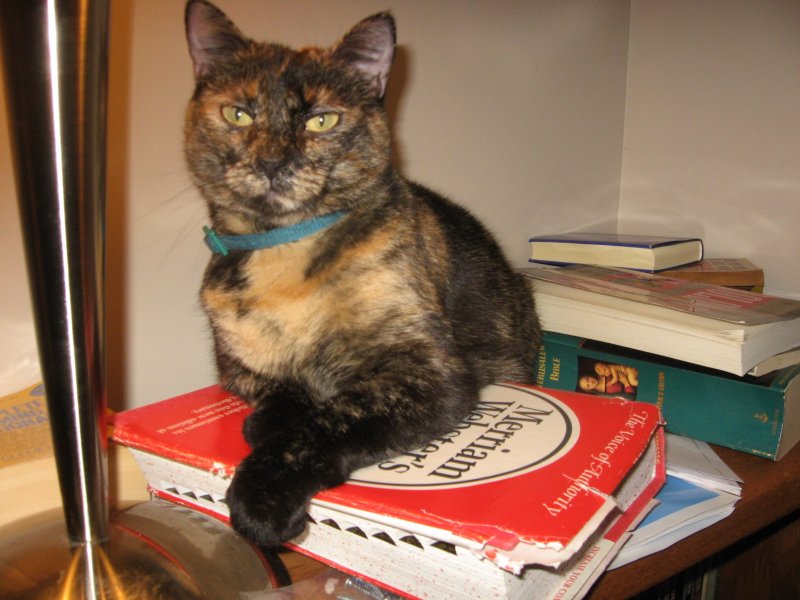
My cat Mokka guarding a dictionary

Mokka sternly protecting a dictionary. December 30, 2008.

If I agree with Grammarly’s recommendation, I use it. If I don’t, I leave my writing as it is, or I make a different change. But I get the impression that a lot of writers take its recommendations as Holy Writ, and I wonder how much it’s affecting writing styles on the Internet.
(more…)