Music


Spohr’s string quartets 1-10 5

Louis Spohr wrote 36 string quartets, more than Mozart or Beethoven, and none of them are very well known. Fortunately, all are available for listening, thanks to a complete set from Marco Polo recorded by several different groups. I’ve started listening to them in numerical order, with plans to write a little about each one. As far as I’ve been able to tell, there’s no such overview on the public Web. Probably someone has written a graduate thesis on the quartets, but I can’t find anything.

While I’m not a professional musician, I’m one of the more activate Spohr fans on the Internet, so I’m giving it a try. The scores on IMSLP and Clive Brown’s Louis Spohr: A Critical Biography have been very helpful.

This post covers the first ten quartets, published between 1807 and 1814.
(more…)

Spohr’s Seventh Symphony

Spohr’s late symphonies, the Seventh through the Ninth (or the Tenth, counting the one which he withdrew but didn’t destroy), don’t have the appeal to me of the earlier ones. Still, a complete understanding of his music needs to include these symphonies, and they have some interesting features.

The Seventh, written in 1841, follows an unusual plan. The title is “Irdisches und Göttliches im Menschenleben: Doppel-Symphonie für zwei Orchester” (earthly and godly in human life: double symphony for two orchestras). It’s a kind of concerto grosso, with a small orchestra and a full orchestra. There are three movements, each with its own title.
(more…)


Spohr’s Des Heilands letzte Stunden

A new release of Spohr’s oratorio, Des Heilands letzte Stunden (the Savior’s last hours), is out from Carus-Verlag. The solo singers are Florian Sievers, Johanna Winkel, Maximilian Vogler, Arttu Kataja, Thomas E. Bauer, Felix Rathgeber, and Magnus Piontek. The chorus is the Kammerchor Stuttgart, and the orchestra the Deutsche Kammerphilharmonie Bremen. It covers the same ground as Bach’s Passions, from Judas’s betrayal of Jesus to his crucifixion. A booklet in English and German contains Johann Friedrich Rochlitz’ full text with a loose translation, as well as detailed notes.

This oratorio came after Die letzten Dinge, also with text by Rochlitz. It premiered in Kassel in 1835. The earlier oratorio is a disaster movie in music. This is a more introspective work. Unlike Bach’s Passions, this “passion oratorio” tells the story primarily from the perspective of Jesus’s followers. The numbers are mostly dedicated to showing their reactions to his capture, trial, and crucifixion. Bach tells the story from a cosmic perspective; Spohr’s oratorio gets very close to the people portrayed. Even Judas is somewhat sympathetic as he expresses his terror over the situation he’s gotten himself into.
(more…)


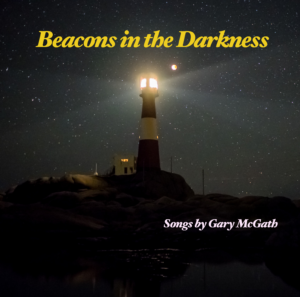
Now on Bandcamp: Beacons in the Darkness

My latest album, Beacons in the Darkness, is now available on Bandcamp. It’s a living-room album, and I make no great claims for my vocal abilities, so payment is optional. It’s the songs themselves which I think have some interest. The title track, a secular solstice song, is one of my best songs, and it’s on the album in both English and German. Album cover for Beacons in the Darkness. Picture of a lighthouse. Text: Beacons in the Darkness / Songs by Gary McGath. Source: https://commons.wikimedia.org/wiki/File:Eiger%C3%B8y_fyrstasjon_28.09.2015_Super_m%C3%A5neform%C3%B8rkelse.jpg

You can find my other albums, likewise on a payment-optional basis, at garymcgath.bandcamp.com.


Spohr’s opera Faust

Spohr and Faust. You knew I couldn’t resist writing about that combination, didn’t you? The delay was in finding an adequate recording. Years ago, I got a CD set where the opera was so heavily cut it was incomprehensible. Since then, I’ve gotten a CPO recording of the 1852 version by the Bielefeld Opera. It’s complete or nearly so, but the download from Presto Music doesn’t include a booklet. I need a libretto to follow along, and there’s a libretto for reading or downloading here. It’s got a lot of typos, as if it was made from an uncorrected scan, but it will do. The Capriccio recording has brutal cuts, and I can’t recommend it.
(more…)