Book discussion


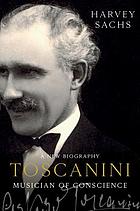
Book discussion: Toscanini: Musician of Conscience

Toscanini: Musician of Conscience was a huge reading project but worth it. It covers the long career of one of the most important orchestra conductors, the man who conducted the premiere of Pagliacci in 1892 and lived long enough to make long-playing records. He was a celebrity in Europe and the Americas and courageously stood up to Mussolini in his home country.

I must admit to skimming through parts of the book. His role in music and politics is most important to me, and I went quickly over parts dealing with his personal relations.
Toscanini was a top-rank conductor with an incredible memory, but I wouldn’t want to be a musician under him. He demanded the best from his musicians, and sometimes he could be extremely rude and unfair with them. On one occasion, he broke a violinist’s bow with his baton. At the same time, he recognized excellence.

In politics, if not at the podium, he was an enemy of tyranny. After a brief period of admiring Mussolini, he recognized that the would-be Duce was a brutal power-luster. In 1924 he refused an order to display Mussolini’s picture. On one occasion, when he refused to perform the Fascist anthem, a gang of Blackshirts beat him up as the police passively watched. In 1938 he left Italy and didn’t return until after World War II.

Sachs discusses his relationships with musicians who remained in Germany and Italy during the dictatorships. Withdrawing from the Bayreuth Festival was a painful decision for him. He condemned Wilhelm Furtwängler for continuing to lend his prestige to the Nazi government.

Sachs writes about an incredible number of affairs Toscanini had with women. He lets Toscanini look honorable for the most part, but I have to wonder. I didn’t see any mention of whether he ever got anyone pregnant; while he wasn’t an observant Catholic, he lived in a culture that was strongly hostile to abortion and even birth control. But as I said, I skimmed over those parts of the book, so I may have missed something.

My main complaint about the book is that its mentions of years are thin. I often had trouble figuring out in which year an event took place. That can be especially annoying if you’re using the book for reference.

This book isn’t a light weekend read, but it’s a fascinating look at an important musician and a courageous person. If you’re willing to commit the time, it’s an excellent book.
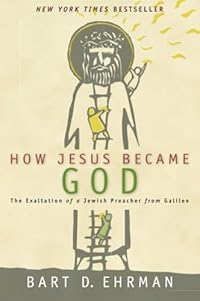

Book discussion: How Jesus Became God

Christianity is a big part of our culture, and even non-Christians have to make some sense of it. I like Bart Ehrman’s treatments of Biblical research. He’s skeptical but not belligerent. I’ve previously read his Misquoting Jesus and enjoyed it. How Jesus Became God addresses questions I’ve been curious about: Why do Christians think he was God incarnate? What exactly do they mean by it? The average Christian isn’t sure, and the more you dig into the questions, the weirder it gets.

Ehrman accepts the existence of the historical Jesus but says he never claimed to be divine. His status gradually grew after his death. Jesus’s followers believed he had risen from the dead, so he was the “Son of God” in some sense, at least after his resurrection. By steps which Ehrman traces, the idea expanded. First he gained special status after the resurrection; then he was anointed of God through his ministry, then from his birth, and at last from the beginning of time. Many variations of these views existed side by side, with their advocates calling each other heretics. The Nicean Council tried to standardize the belief, but it wasn’t till years later that Christianity mostly settled down to the currently standard view.

Cover of How Jesus Became GodThis view is that Jesus is God but isn’t God the Father; that God is one but also three; that the Son was begotten of the Father but always existed from the beginning of time. Make sense of that if you can. For most Christians, these details don’t matter, but early Christians thought that if they didn’t get Jesus’s nature exactly right, they might go to Hell for blasphemy. Apparently God is full of mercy but will torture believers forever if they don’t pass a theology quiz.
Ehrman notes that the only Gospel in which Jesus claims to be a divine being is John, which scholars think was written later than the others. If he really made such claims, he notes, it’s strange that Matthew, Mark, and Luke don’t mention them.

In Ehrman’s view, Jesus was an apocalyptic preacher, expecting the world to end soon and be replaced by the Kingdom of God under his leadership. He thought he was a Messiah but not a divine being. There were many others like him. Ehrman thinks the reason Christianity was so successful was that Jesus’s followers had “visions” of him as a resurrected person. He uses the term as a neutral one, not taking a position on whether they were real or not. There comes one of the problems with the book: it promotes a compartmentalized way of thinking. Ehrman refuses to take a stand as a historian on whether the resurrection happened or not.

He writes: “Religious faith and historical knowledge are two different ways of ‘knowing.’ This effectively grants equal validity to both. Elsewhere he claims, “University intellectuals almost never speak of ‘objectivity’ any more, unless they happen to live on the margins of intellectual life.” If objectivity is impossible, if research and bald assertion have equal epistemological status, then anything goes.

Ehrman’s description of the official Christian (or at least Catholic) position on Jesus’s nature makes it sound even crazier than I had thought. He argues convincingly that Jesus probably didn’t have a proper burial but was just thrown on a pile of bodies; that was what the Romans did with crucified people. But if Jesus wasn’t buried in a tomb, there couldn’t have been an empty tomb to find. The whole account unravels, yet Ehrman won’t say that the claims of Jesus’s recognition are groundless fantasy.

These notions aren’t harmless stories. As Ehrman notes, Christian authorities have had many people tortured and executed for heresy. The Jewish people were persecuted for centuries for killing the immortal God. Nonsense should be called out as nonsense when it affects people’s lives.

Even so, How Jesus Became God is very readable, and Ehrman’s explanation of the development of Christian beliefs is fascinating. If that’s a subject that interests you, I think you’ll like the book.


Book discussion: It Can’t Happen Here

Sinclair Lewis’s novel of an American dictatorship, It Can’t Happen Here, seems even more timely today than when it was published in 1935. It tells of the election of Buzz Windrip as president, his seizure of absolute power, and how it affects people.

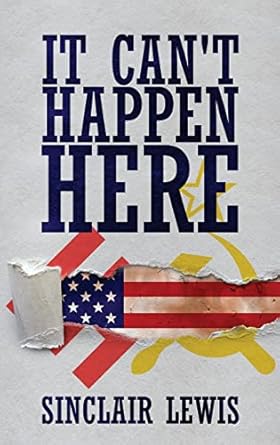
Cover of It Can't Happen Here by Sinclair LewisWindrip is so Trump-like you might think Lewis had a crystal ball looking into our present. He aims for total control while posturing as an ordinary, unassuming person. His platform is incoherent, laced with bigotry while appealing to the “Forgotten Man.” His Cabinet selections are based on personal loyalty. He has a personal police force, the “Minute Men,” to intimidate his critics. He even has an advisor who is smarter and more ruthless than he is.

What make’s Windrip’s success possible is the complacency and indifference of the American people. As he plainly says he’s going to reduce Congress to an advisory capacity, people think he’s just going to fix the country up. The novel’s main focus isn’t on the centers of power but on Doremus Jessup, the publisher of a small Vermont newspaper who’s trying to make sense of it all. This lets Lewis show how people react to Windrip before and after his takeover. Once he’s in office, he immediately suppresses the legislative and judicial branches, which give him no further trouble.

Lewis had seen what had happened in twentieth-century Russia, Germany, and Italy. He knew the USA wasn’t immune. Reading the novel gives a better understanding of what’s happening — and what could happen — today.


Book discussion: Fighting for the Freedom to Learn

The history of what’s known as “school choice” is more convoluted than I had realized. Fighting for the Freedom to Learn, from the Cato Institute, maps out that history in a set of twelve essays by different authors. Together, they add up to a narrative from the colonial era to modern times in the United States. The book is less polemic than its title may sound, providing a lot of information for anyone interested in the history of American education.

This isn’t an area where I have much knowledge, so I can’t say confidently how accurate it is. I can say that it presents an informational tone, has lots of end notes, and doesn’t say anything that looks obviously suspicious.

Most people today look at advocacy of school choice as an exclusively right-wing issue. (Everything today is a right-wing or left-wing issue.) In the past, though, it’s been complicated. Today we think of public schools as secular institutions, but for much of our history they were tools of nativist Protestant hegemony. I’m old enough to remember being told in school to pray to “Our Father.” In the first half of the nineteenth century,

A crucial factor of the development of the state role in education was an expansion of the concept of the citizen. With increased discussion of alternative forms of political authority, there was a renewed appreciation of Aristotle’s argument that citizens should be shaped by state-directed education to match the form of government under which they would live.

The concern increased along with the growth in Irish immigration, which was mostly Catholic. Senator James Blaine promoted state constitutional amendments, as well as unsuccessfully urging a national one, barring the granting of government funds to religious schools, while insisting that they could “not be construed to prohibit the reading of the Bible in any school or Institution.” By “the Bible,” he meant the King James Bible. The target of the amendments was Catholic schools.

The authors acknowledge that following the Supreme Court’s Brown decision and the Civil Rights Act, many segregationists saw private schools as a way to maintain racial purity, but they insist this is far from the whole story. Public schools with predominantly black student bodies often got a bad deal (and sometimes still do).

Throughout American history, people from all walks of life have sought educational options for a variety of pressing reasons, most of them rooted in freedom. The roots on the left are deep and fascinating. They are found in the centuries-old struggle for educational opportunity in the black experience, in the liberal academics who saw vouchers as a tool in the War on Poverty, in the counterculture dissidents who sparked the “free schools” and homeschooling movements, and even, for 20 years, in the Democratic Party’s national platform.

There’s a lot to learn from this book. I recommend it to people interested in American educational history.


Book discussion: You Don’t Own Me

I’ve been neglecting book discussion posts. Starting with this one, I want to make them a more regular feature of this blog, at least one a month. Books are important, and doing this will not only help me to get the word out about them, it will push me to read more.

(I thought I’d published this a month ago, but I can’t find it in my blog. Here it is now. My next book discussion should follow very soon.)

Individualism isn’t just a political concept. It’s an outlook on life, the recognition that each person is distinct and important. An outlook that values the individual affects our personal interactions. The arts can affirm this outlook or reject it. Timothy Sandefur’s You Don’t Own Me addresses the intersection of the arts and individualism, with mixed results.

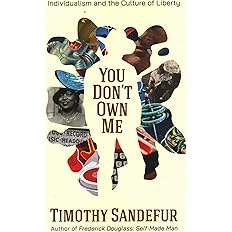
Cover of You Don't Own Me by Timothy SandefurThe cover art looks like jigsaw pieces that don’t obviously fit together, which could also describe the book. It’s a series of loosely connected essays. The second one is the text of a speech, which with a little editing would have fitted better into the book. Some of the sections are quite good. “Zora Neale Hurston, Undefeated” makes me want to learn more about that author. On the other hand, “Anarchy, State, and Zombie Dystopia,” a discussion of The Walking Dead, left me confused because he assumes the reader is already familiar with it. Someone not as obsessively familiar as me with Star Trek might say the same of “Navigating by Fixed Stars: The Moral Trajectory of Star Trek.”

Fragmented as it is, the book will still introduce readers to authors and musicians who have upheld individualist values. It may also give them new information about familiar creators. For instance, I hadn’t known that the time from William Sydney Porter’s first published story as “O. Henry” to his death was barely more than a decade. In at least one case I wish he’d given more information; he credits the song “You Don’t Own Me” to singer Lesley Gore but says only that “two men” wrote it. Songwriters should get credit, but too often only the people who sing their songs get it. That’s especially unfair when the lyrics are the important point, as they are in the title essay.

The book isn’t bad, but it’s hard for me to give it a strong recommendation. Sandefur’s Frederick Douglass: Self-Made Man is more interesting, and I’d suggest reading it first. If you like his writing, you may want to come back to this one.