Yearly Archives: 2020


The decline of Apple’s Books app

When it comes to Apple’s software, Plato may have been right. Every change is for the worse. Catalina is outrageously slow. The Books app on the iPad has always been an advertising medium, but it’s gotten really out of hand now.

A few days ago, The Magic Battery magically disappeared from my new iPad. I don’t know why. It’s still on the old iPad. My best guess is that it no longer allows Epub files which I created myself.

Another book, one of the few which I purchased from Apple, is now reachable only by going through a page advertising the other books in the series.
(more…)


Book discussion: The Open Society and Its Enemies (1: Plato) 1

A lot of people have never read Karl Popper’s The Open Society and Its Enemies, yet they energetically cite one ambiguous note from it about the “paradox of tolerance” to enlist him as an advocate of censorship. I’m not going to waste more words on those idiots, but rather will comment on the substance of what he wrote.

It’s fashionable to say that what “dead white people” wrote doesn’t matter, but the philosophy of past centuries has shaped where we are today. The effects of European philosophy aren’t limited to white people.

The Open Society and Its Enemies is a two-volume work. The first, which I’ll cover here, is about Plato. The second is subtitled “Hegel and Marx.” While no one follows Plato’s ideas in their original form, his vision of an authoritarian, collectivist state is still highly influential. Some look to his Republic (which is anything but a republic in the modern sense) as an ideal of social stability. The idea of the “philosopher-king” still sounds noble to some. The idea that “justice” means whatever serves the state keeps coming back. The battle for freedom is still largely a battle against Plato. Brave New World, which I wrote about a few weeks ago, is an updated, technologically advanced version of the Republic.
(more…)
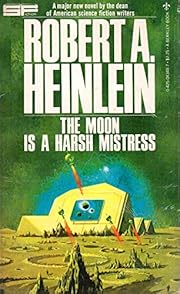

Book discussion: The Moon is a Harsh Mistress

Cover, The Moon Is a Harsh MistressRobert Heinlein’s The Moon Is a Harsh Mistress is one of his most enduringly popular novels, especially among libertarians. Doing these book posts gave me an excuse to read it for the first time in many years.

I could write a dozen essays on different aspects of the novel. Can a computer “wake up”? What are the implications of Professor de la Paz’s philosophy of “rational anarchism”? Why did Mike go away at the end? For this piece, I’ll look at Lunar society, how it’s organized, and how tenable the idea is.
(more…)


Book discussion: Free to Move

Darth Vader saying: Not happy with the Empire? Then move to Another GalaxyIt’s a curious thing that the people who say you should leave the country if you don’t like it are so often the ones who favor legal barriers to doing it. Having the option is a valuable freedom, though.

We take for granted the freedom of Americans to travel from one part of the country to another, or at least we did until 2020. Now governments are imposing interstate travel restrictions in a futile attempt to contain a virus which is already on both sides of every state line. Shortly before I started writing this, I learned that if I travel six miles to Massachusetts, I now have to show a recent negative COVID-19 test or quarantine for 14 days. I don’t know how they plan to enforce it. Putting checkpoints on every road that crosses the state line would be ridiculous. Maybe they’ll pull over cars with out-of-state plates and demand test documentation. Maybe friends and family members will start standing on opposite sides of the state line to talk to each other as the police watch to make sure they don’t step over the border.

The freedom to “vote with your feet” is the topic of Ilya Somin’s book, Free to Move. Somin is probably best known for his writing in the collaborative legal blog “The Volokh Conspiracy.” He presents an argument for maximizing the freedom to relocate from one country, state, or town to another.
(more…)