history


The history of blasphemy in writing

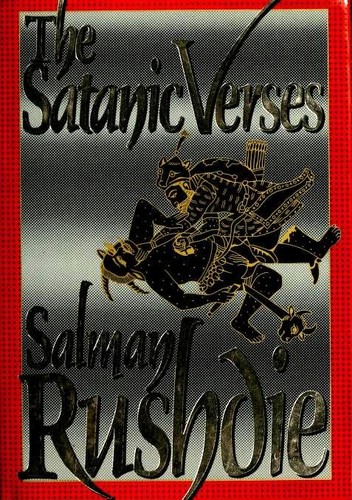
The August 12 assault on Salman Rushdie was almost certainly prompted by his “blasphemy.” In 1989, the Ayatollah Khomeini took a dislike to Rushdie’s The Satanic Verses, called it blasphemy, and put a bounty on Rushdie and his publishers. Rushdie went into hiding for years, the book’s Japanese translator was murdered, and the Italian translator was stabbed. Cover of The Satanic Verses
Writing about controversial subjects has always attracted anger and violence, and religion is one of the most controversial. Many governments with state religions have imposed severe penalties for blasphemy. Leviticus 24:16 says, “And he that blasphemeth the name of the Lord, he shall surely be put to death, and all the congregation shall certainly stone him: as well the stranger, as he that is born in the land, when he blasphemeth the name of the Lord, shall be put to death.” The most famous blasphemy execution in history was the one of Jesus of Nazareth. For his part, Jesus said that blasphemy against the Holy Spirit is the one unforgivable sin.

In modern times, several countries, mostly Muslim, have laws against blasphemy, sometimes carrying the death penalty. In Pakistan, mobs have murdered alleged blasphemers. Even the supposedly civilized country of Austria has a blasphemy law, and several people have been convicted under it. The European Court of “Human Rights” says that such laws are fine. So much for freedom of religion. Germany has a law that can get someone who “through dissemination of written materials (section 11(3)) defames the religion or ideology of others” locked up for three years.
(more…)


Book discussion: To Kill a Mockingbird 1

I thought I had read To Kill a Mockingbird before, but I must have been mistaken. I couldn’t have forgotten so much of so powerful a book.

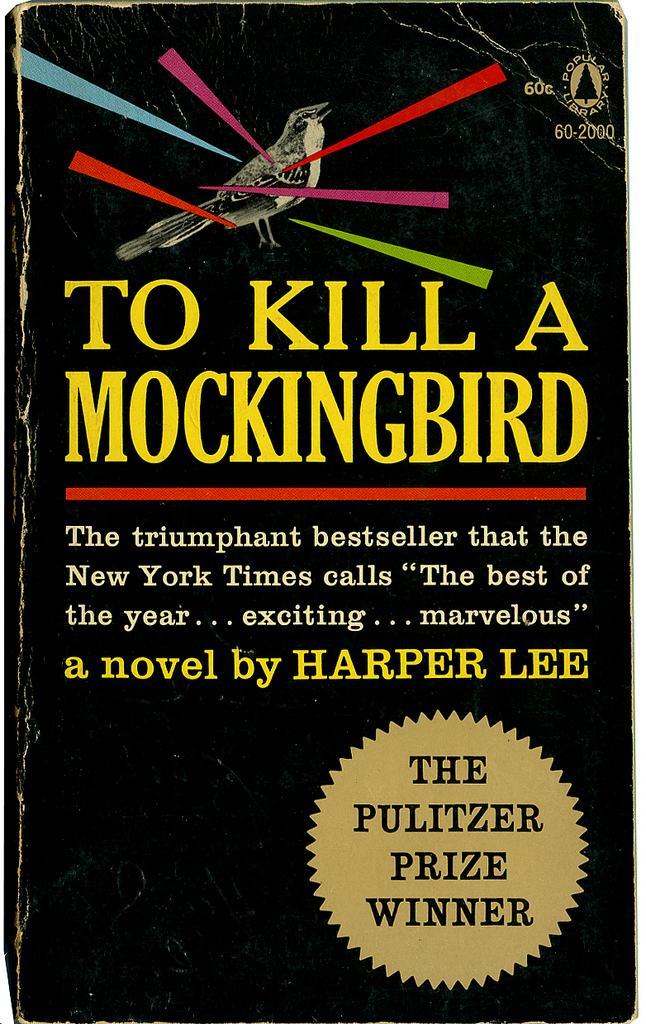
It must have been the movie that confused my memory. It’s an excellent adaptation of the book, but it focuses more on the Tom Robinson trial. The trial is an important part of Harper Lee’s novel, but the canvas is broader.Cover, old paperback edition of To Kill a Mockingbird

The novel presents the experiences of a girl growing up in a small Alabama town in the 1930s. Her father is Atticus Finch, an attorney of impeccable integrity. It presents what seems to me like an honest picture of people’s attitudes in that place and time.
(more…)


Book discussion: Enlightenment Now

Is the world going to hell? Are we all doomed? Steven Pinker has consistently argued that not only is this view mistaken, the long-term trends of the world show steady improvement in human well-being. Enlightenment Now: The Case for Reason, Science, Humanism, and Progress provides many specifics in support of this position.

Englightenment Now coverAlarm and disasters sell in the news media. People want to appear serious by citing problems rather than progress. Organizations looking to raise money or get people involved focus on what needs fixing. Taken together, they can create the impression that only terrible things are happening and they’re getting worse.
(more…)


Book review: For Faith and Freedom: A Short History of Unitarianism in Europe

Cover, For Faith and FreedomThe title of this blog post includes the subtitle, because otherwise the book title sounds like a conservative political treatise. Charles Howe’s For Faith and Freedom is part of my growing research collection for the Thomas Lorenz novels. Before reading it, I was worried that Frieda might be unrealistically advanced in her views for the 16th century. After reading the accounts in this book, I understand better that it was entirely possible to launch a full-scale attack on the Christian orthodoxies of the day. You just had to take into account the likelihood of being denounced, physically attacked, arrested, imprisoned, tortured, and burned alive.
(more…)


Book discussion: The Open Society and Its Enemies (1: Plato) 1

A lot of people have never read Karl Popper’s The Open Society and Its Enemies, yet they energetically cite one ambiguous note from it about the “paradox of tolerance” to enlist him as an advocate of censorship. I’m not going to waste more words on those idiots, but rather will comment on the substance of what he wrote.

It’s fashionable to say that what “dead white people” wrote doesn’t matter, but the philosophy of past centuries has shaped where we are today. The effects of European philosophy aren’t limited to white people.

The Open Society and Its Enemies is a two-volume work. The first, which I’ll cover here, is about Plato. The second is subtitled “Hegel and Marx.” While no one follows Plato’s ideas in their original form, his vision of an authoritarian, collectivist state is still highly influential. Some look to his Republic (which is anything but a republic in the modern sense) as an ideal of social stability. The idea of the “philosopher-king” still sounds noble to some. The idea that “justice” means whatever serves the state keeps coming back. The battle for freedom is still largely a battle against Plato. Brave New World, which I wrote about a few weeks ago, is an updated, technologically advanced version of the Republic.
(more…)