fiction


Book review: Retaking College Hill

Walter Donway
Retaking College Hill: The Adults Are Back
Paperback or e-book, Amazon.com
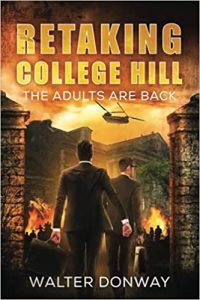
Cover, Retaking College HillRetaking College Hill is a novel of both action and ideas. It deals with a topic which is an excellent source of dramatic conflict but hasn’t been used in literature as much as it should. That topic is the battle for academic freedom, for making universities a place for teaching and controversy without fear of retaliation.
(more…)

Book discussion: The Moon is a Harsh Mistress

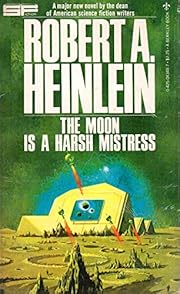
Cover, The Moon Is a Harsh MistressRobert Heinlein’s The Moon Is a Harsh Mistress is one of his most enduringly popular novels, especially among libertarians. Doing these book posts gave me an excuse to read it for the first time in many years.

I could write a dozen essays on different aspects of the novel. Can a computer “wake up”? What are the implications of Professor de la Paz’s philosophy of “rational anarchism”? Why did Mike go away at the end? For this piece, I’ll look at Lunar society, how it’s organized, and how tenable the idea is.
(more…)


Book Discussion: Brave New World 2

Brave New World coverThe early 1930s were a bad time for people who loved freedom. The Communists had taken over in Russia, as had the Fascists in Italy, and the Nazis were fast gaining power in Germany. The world economy had just crashed. In 1932, Aldous Huxley published Brave New World, his novel of what the totalitarian future might be like.

It hasn’t held its popularity as well as Orwell’s 1984, but it may be a better prediction of the future. In Huxley’s dystopia, there are no secret police or torture chambers. The police use tranquilizers rather than lethal bullets. People are punished by reassignment rather than death or prison. It works because everyone is brainwashed from birth and controlled by drugs. Organized rebellions don’t happen. The models for 1984 were Nazi Germany and Stalinist Russia. Brave New World is closer to modern China.
(more…)


Book discussion: Fahrenheit 451 1

“It was a pleasure to burn. It was a special pleasure to see things eaten, to see things blackened and changed.”

Those are the opening words of Ray Bradbury’s Fahrenheit 451. They could also have been the words of whoever torched Uncle Hugo’s Bookstore in Minneapolis. (The crowdfunding campaign to restore it is still active.)

The arsonist might have gone on, as the protagonist’s thoughts do: “You weren’t burning anyone, you were burning things! And since things really couldn’t be hurt, since things felt nothing, and things don’t scream or whimper … there was nothing to tease your conscience later. You were simply cleaning up.” The goons who write in defense of looting and burning regularly say there’s nothing wrong with destroying mere property.
(more…)