SFWA, Mercedes Lackey, and taboo words 3

Science Fiction and Fantasy Writers of America (SFWA) named Mercedes Lackey a Grand Master at the Nebula Awards ceremony, then almost immediately turned around and removed her from the Nebula Conference. The stated reason was that she “used a racial slur” while on a panel.

English has long had taboo words. At one time, the strongest ones dealt with religion. Later on, ones relating to bodily functions headed the list. It’s still illegal to tell people on broadcast television what the Supreme Court’s seven dirty words are. How do you avoid breaking the law when you can’t be told what the law forbids?

The Lackey situation is similar. The File 770 article doesn’t tell us what the alleged racial slur was. Readers are likely to imagine the worst words possible (which I won’t mention, since they may lower my search engine visibility). In fact, the word she used was “colored.” If that’s a slur, then the NAACP commits it every time it gives its full name, National Association for the Advancement of Colored People.
(more…)


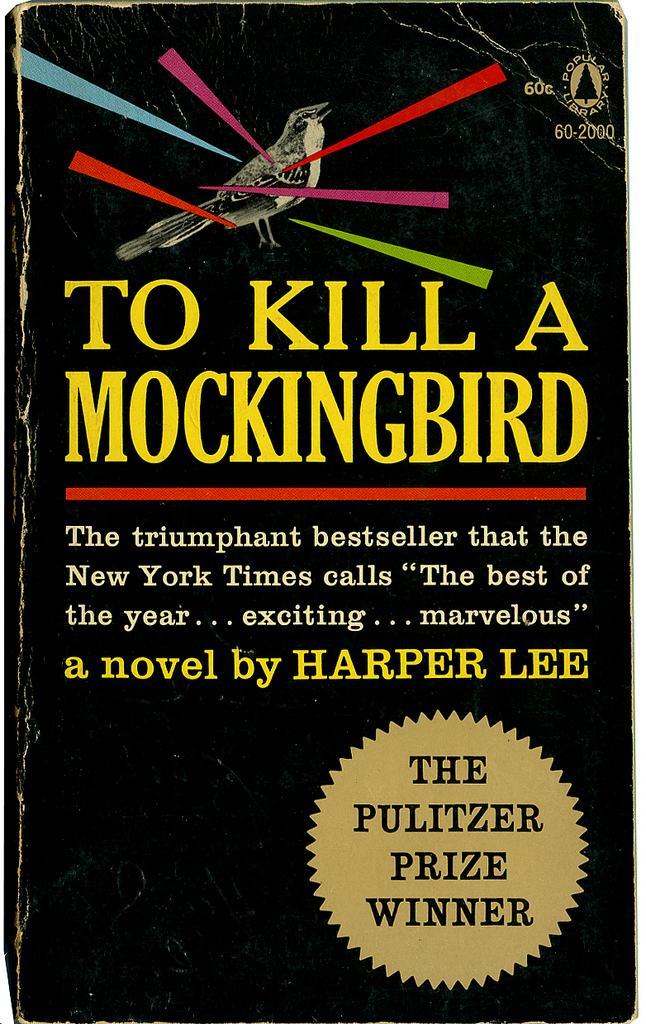
Book discussion: To Kill a Mockingbird 1

I thought I had read To Kill a Mockingbird before, but I must have been mistaken. I couldn’t have forgotten so much of so powerful a book.

It must have been the movie that confused my memory. It’s an excellent adaptation of the book, but it focuses more on the Tom Robinson trial. The trial is an important part of Harper Lee’s novel, but the canvas is broader.Cover, old paperback edition of To Kill a Mockingbird

The novel presents the experiences of a girl growing up in a small Alabama town in the 1930s. Her father is Atticus Finch, an attorney of impeccable integrity. It presents what seems to me like an honest picture of people’s attitudes in that place and time.
(more…)


Dissecting clickbait stories

When you report or comment on a news story, the first step is to understand what it says. Low-quality websites have ways of appearing to say more than they do. They aim to create a panic and attract links. A careful reading may show there isn’t much substance to what happened.

Let’s look at a Daily Mail article claiming that an application called “New Profile Pic” “hoovers up your details.” A careful reading shows that doesn’t mean much.
(more…)


Words banned from Wordle, the sequel

A while back I wrote about how the New York Times excluded certain words from Wordle. It wouldn’t recognize “slave,” “lynch,” and “COVID,” though other potentially alarming words were allowed.

Now “fetus” has joined the list of banned words. The Times changed the puzzle in the middle of the day and apologized. It’s not clear what it was apologizing for, but its statement said, “We want Wordle to remain distinct from the news.” This is a hopeless goal. The Times’ news stories and Wordle draw on the same vocabulary.

People who didn’t refresh their browsers might have seen the earlier puzzle even after it was withdrawn.


A new review of Spells of War

Monica Cellio has posted a review of Spells of War.

Spells of War tells an interesting story with characters I cared about. In both books, the author made me care about, and understand the inner struggles of, people who are on the “other side” — the inquisitor in the first book and Petros and his peers in the second. Spells of War shows the devastation that war causes on all involved.

As she notes, Monica was a beta reader and got a free copy in return for her useful advice. There was no quid pro quo beyond that.

Here’s the information on ordering Spells of War.


Trigger warnings with fiction

A Reddit group lets people announce their novels and asks the authors to include any appropriate trigger warnings. The implied assumption is that fiction routinely contains passages that will trigger anxiety attacks or PTSD and that readers ought to be warned. It’s part of a trend calling for trigger warnings everywhere.

This approach has a couple of problems. A trigger warning is a spoiler. Shocking events in a novel aren’t as effective if the reader knows about them in advance, even in general terms. Imagine “Bambi Meets Godzilla” with a trigger warning. Second, it’s not clear whether they help. Psychologists have argued that treating people as fragile may only make them more fragile.
(more…)


The misuse of “identity” 1

If you’ve followed this blog regularly, you know that the misappropriation of words is a favorite topic of mine. Today I’d like to discuss the misuse of “identity.” Some people misuse it deliberately, but writers can fall into accepting it as it’s misused. Hopefully this post will help in avoiding that pitfall.

“Identity” is a straightforward word. It means “who someone is.” We can talk about the identity of someone who committed a crime, a case of mistaken identity, a secret identity for a superhero, establishing your identity, and identity theft. Some people, though insist that your identity is your group membership: your skin color, gender, sexual orientation, nationality, etc. Interestingly, people on the “left” as well as white supremacists like to promote this view.
(more…)


Be kind to obscure novelists week

It’s safe to say I’m an obscure novelist. I know lots of other obscure novelists and even a few you’ve likely heard of. When they’re friends, I try to make them a little less obscure. It doesn’t take a lot of effort. Authors love reviews, but a full review isn’t necessary. Any mention helps if it isn’t too negative.

If you have a blog or use social media, mentioning the books you’ve read lately helps the authors. Dan Brown may not care, but it can make a significant difference to someone who’s hoping to hit a thousand sales. If you use sites like LibraryThing and Goodreads, follow the authors you know and rate their books. If they run a promotion, let your friends know about it.

You might even learn something about your friends’ interests and knowledge from the books they’ve written.

To put my keyboard where my mouth is, here are some novels by authors I know who are less than famous:
(more…)


Spotting fake videos 1

Writing about the Russian invasion of Ukraine means taking arms against a sea of misinformation. The Russian government is lying on an astonishing scale, but we can’t always trust information from the Ukrainian side either. In war, there’s always a tendency to paint the enemy in the worst light possible, and sometimes that includes making up facts. In the modern era, it includes faking videos.

Distinguishing authentic videos, which present what they claim they do, from fakes isn’t easy. These are some of the fakers’ tricks:
(more…)


Working with the Smashwords Meatgrinder

Smashwords was once a leading distributor of e-books. I still use it, since I don’t care to give Amazon an exclusive on my work and Smashwords offers a good deal. Smashwords lets me distribute to several other outlets. It’s become obvious, though, that it’s fallen behind technologically.

Compare the process of uploading books. When I uploaded Spells of War to Amazon KDP, I was asked for a DOCX file. There was little trouble exporting one from LibreOffice and uploading it. The one issue was that even though the file had its own table of contents, KDP wanted to generate its own. I deleted the existing table of contents and let the server generate one. It wasn’t immediately obvious how to position it after the title page (you drag it in the list of elements), but I figured it out pretty quickly.

Smashwords has an old piece of software, called “Meatgrinder,” to turn a DOC (not DOCX) file into various e-book formats. When I uploaded my file, it gave me several cryptic error messages. They all pertained to indented quotations in the book, and they all referred to the intermediate HTML which Meatgrinder created. Specifically, they told me that HTML tags, such as blockquote, weren’t properly nested. I didn’t create those tags; Meatgrinder did. It was telling me about its own errors and expecting me to fix them!

Something similar had happened with The Magic Battery, but I couldn’t remember how I solved the problem then. This time, I changed the style of all the quotes to Text Body and then applied styling to adjust their indentation. This is the wrong way to style a book robustly, but it got Meatgrinder to accept the file. Soon Smashwords should let me distribute the book to other channels. At the moment it’s pending review.

I’d like Smashwords to stay around so that Amazon has competition, but I can see problems like this discouraging self-publishing authors.

Update: I just came across an announcement that Draft2Digital is acquiring Smashwords. Mergers always raise questions and concerns, but the announcement says Smashwords authors and publishers will get access to “simpler publishing tools,” so there’s reason for optimism. I’ll try to keep up with the news on this development.