Monthly Archives: August 2022


A new article from me on Verdi

Liberty Fund’s Online Library of Liberty has given me a chance to turn my love of classical music into paid work. My third article on an operatic subject is now up on the site, discussing Verdi’s Don Carlo. This piece also let me put my study of the 16th century to good use. In fact, the opera’s strange ending makes more sense if you assume intervention by my Magic Battery mages, as in “Snares of Satan.” How else could Charles V have rescued the protagonist ten years after his death?

But seriously, the opera gets into themes of religious oppression and liberty, which were very important to Verdi. It deals with the rebellions in the Spanish-held Low Countries, fueled by the Protestant Reformation. The Grand Inquisitor is creepy, and the auto-da-fé scene is spectacular. I enjoyed the chance to watch the opera again online and write about it.

These are my previous opera articles on the same site:

Here’s my author page, now with links to my articles.

The war on words

Calling someone a “villain” is a city-ist insult. The word originally means “base or low-born rustic,” clearly an insult by the urban higher classes aimed at farmers, serfs, and others from the villages. By the censorious standards we run into so often, we should stop using the word and denounce anyone who does. This is, of course, silly, but no sillier than many actual attacks on words.

In some circles, you can’t have a “master” switch or password anymore. The word has a range of meanings, generally in the categories of someone in authority or someone with extensive knowledge and skill (or at least a degree saying so). One of these meanings is “a person in authority over slaves,” so the use of the word is deemed an endorsement of slavery, and it has to go. There are even people trying to rename the Maine coon cat. The origin of the name is obscure, but the most likely explanation is that the tail somewhat resembles a raccoon’s. However, the term “coon” has been used as a racial insult, so the name has to go. Probably raccoons need to be renamed as well.

(more…)


Two miscellaneous Nigeria-related items

By chance, I came across two items related to Nigerian science fiction yesterday. They’re interesting enough to add up to one blog post.

The novel Our Lady of the Artilects caught my attention because of an article mentioning that it touches on the Chinese treatment of the Uyghurs and suggesting it might be a Hugo nominee at the Chengu Worldcon. The prospect sounds mischievously wonderful. I’ve ordered the book, and I won’t have an informed opinion on whether it merits a Hugo till I’ve read it. It’s based largely in a future version of Nigeria, which I think puts it in the sub-genre known as “Afro-futurism” even though the author, Andrew Gillsmith, is American.

The other item is that Nigerian SF author Oghenechovwe Donald Ekpeki was denied a visa, which means he can’t go to Chicon 8. He had raised over $7,000 through crowdfunding to get to the US, but his interview with the US Embassy reportedly lasted about a minute before he was turned down for unclear reasons. He has been nominated for two Hugo Awards this year and has received a Nebula. Update: An edit to the File 770 article includes a letter from the US Embassy, addressed to “Dear Applicant,” saying he was turned down because of fears that he might not go home after the Worldcon. The prospect of creative, successful people staying in the US is too much for our government to bear.

Update: Ekpeki got his visa and will get to Chicon after all.


“Am I allowed to write about…?”

The question keeps popping up on Reddit: “Am I allowed to write about [category of people who are different from me]?” It’s always on Reddit.

Short answer: Yes.

Slightly longer and more precise version: There’s no “allowed.” You don’t need to ask anyone for permission to write.


The history of blasphemy in writing

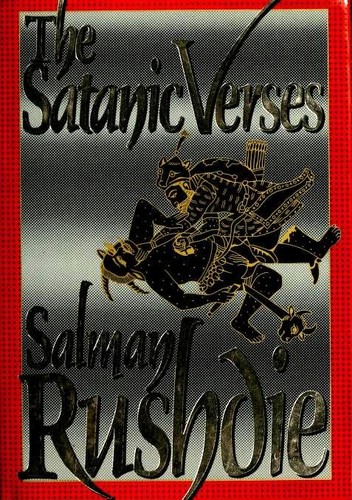
The August 12 assault on Salman Rushdie was almost certainly prompted by his “blasphemy.” In 1989, the Ayatollah Khomeini took a dislike to Rushdie’s The Satanic Verses, called it blasphemy, and put a bounty on Rushdie and his publishers. Rushdie went into hiding for years, the book’s Japanese translator was murdered, and the Italian translator was stabbed. Cover of The Satanic Verses

Writing about controversial subjects has always attracted anger and violence, and religion is one of the most controversial. Many governments with state religions have imposed severe penalties for blasphemy. Leviticus 24:16 says, “And he that blasphemeth the name of the Lord, he shall surely be put to death, and all the congregation shall certainly stone him: as well the stranger, as he that is born in the land, when he blasphemeth the name of the Lord, shall be put to death.” The most famous blasphemy execution in history was the one of Jesus of Nazareth. For his part, Jesus said that blasphemy against the Holy Spirit is the one unforgivable sin.

In modern times, several countries, mostly Muslim, have laws against blasphemy, sometimes carrying the death penalty. In Pakistan, mobs have murdered alleged blasphemers. Even the supposedly civilized country of Austria has a blasphemy law, and several people have been convicted under it. The European Court of “Human Rights” says that such laws are fine. So much for freedom of religion. Germany has a law that can get someone who “through dissemination of written materials (section 11(3)) defames the religion or ideology of others” locked up for three years.

(more…)