grammar


Four use cases for the passive voice 2

Are you plagued by passive voice phobia? Have you been told that the passive voice must never be used? As an antidote, here are some cases where the passive voice is the best choice. Remember them and don’t let yourself be intimidated!

There is no known or definite actor

If it isn’t clear who or what performed the action, you can use a subject such as “something,” “people,” or (as in this sentence) the impersonal “you.” If you’re legally minded, you can say “person or persons unknown.” But leaving the actor out altogether is sometimes the strongest choice. If you work at a help desk and customers have been giving you a rough time, you can yell (preferably while off the phone), “I’ve been abused and insulted enough!” It’s not any particular person you’re blowing up about, but the accumulated abuse.
(more…)

Powerful verbs: Beyond the passive voice

“Carthago delenda est!” Do you think the passive voice is weak? That passive-voice construction (“Carthage must be destroyed!”) brought down a powerful nation.

Most writers at least vaguely recognize that the passive voice is often a bad thing. Fewer of them know why, or even what it is. People trying to sound smart use the term “passive voice” for many things that aren’t. It’s just one of several ways that verbs are often weaker than they could be. Let’s take a look at them and learn the differences.
(more…)


Can you rely on Grammarly?

Update: This article still gets occasional views, though it’s eight years old as I’m adding this note (May 19, 2026). Grammarly keeps updating its software, so the points I made here may not all apply today. I still stand by the advice under “A tool, not an oracle.” It’s more important than ever as overreliance on AI grows more common.

 
Mistakes in spelling or grammar can torpedo an otherwise great article. Grammarly is a popular online tool for catching them. I use the free version regularly to check articles before submitting them. It does a decent job at catching the worst of my blunders. It hasn’t impressed me enough to go for the paid version, too. It has its quirks, being obsessive on some issues and plain wrong on others.

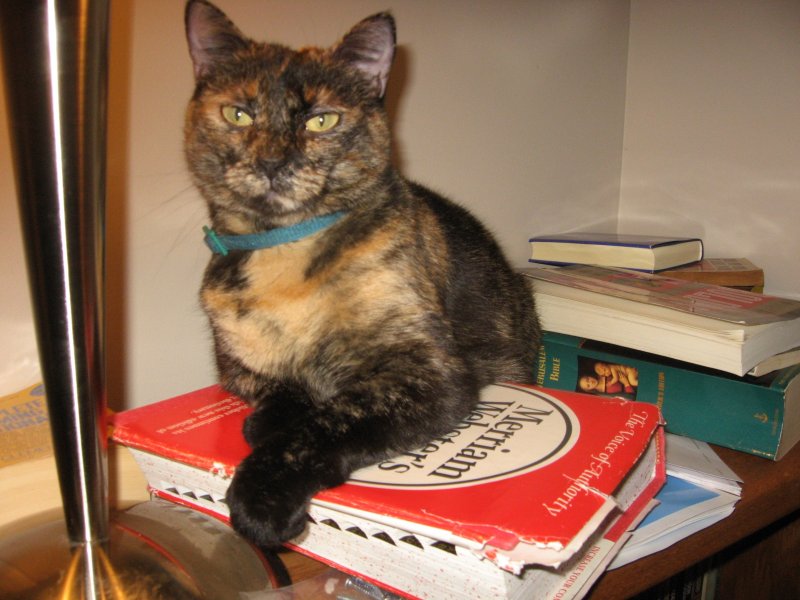
My cat Mokka guarding a dictionary

Mokka sternly protecting a dictionary. December 30, 2008.

If I agree with Grammarly’s recommendation, I use it. If I don’t, I leave my writing as it is, or I make a different change. But I get the impression that a lot of writers take its recommendations as Holy Writ, and I wonder how much it’s affecting writing styles on the Internet.
(more…)