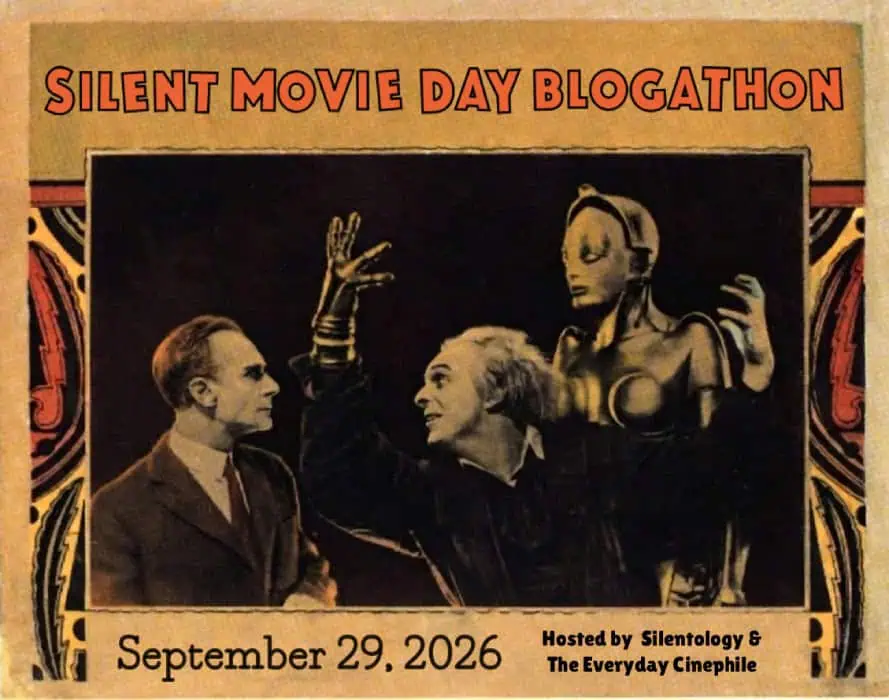
Oops — Silent Movie Day is tomorrow as I’m typing these words, there’s a blogathon coming, and I should write something! Here are some words about what I’ve learned in accompanying silent films.
The best accompanists have busy schedules, and they accompany several different movies each month if not each week, traveling a lot. I just accompany occasional movies within an easy drive from my home. But this gives me a chance to learn each movie in depth, to know every event and every surprise. This lets me get my timing as close to perfect as I can and develop thematic ideas to fit the situation. I’ve been complimented on my timing more than any other aspect of my playing.
This doesn’t mean I should punctuate every surprise and gag with a musical cue. That’s called “Mickey Mousing,” and good accompanists frown on doing too much of it. It’s OK or even necessary with physical comedy and early cartoons, but it’s the wrong approach when the story and characters are more important. Normally, the accompaniment shouldn’t call attention to itself. It should enhance the movie rather than trying to narrate it.
Sometimes the accompanist can create appropriate sound effects, using an electronic keyboard or equipment picked for the show; that’s not the same as Mickey Mousing. For D. W. Griffith’s America this summer, I provided hundreds of gunshots from my keyboard. Some accompanists bring bells or noisemakers when they fit the movie.
The ideal is for the music to feel like a part of the film. It should increase the audience’s immersion in what’s happening on the screen. Think of how a John Williams score works with a modern movie. Occasionally the music will grab your attention; storm troopers gather to the tune of the Imperial March, or a shark approaches as two alternating notes build in power. Most of the time, though, your focus is on what’s happening. The music is there, and the scene wouldn’t be nearly as effective without it, but it’s not what you’re thinking about.
Music in silent movies comes closer to the foreground, since it isn’t competing with spoken dialogue or sound effects. It’s usually continuous, while modern movies have many scenes without accompaniment. This allows more opportunities to build the film into a musical whole, but subtlety is essential.
I learn more with each movie I accompany. Here’s a list of what I’ve accompanied and what I’m scheduled to accompany.