Personal


ICE watching in New Hampshire   Recently updated !

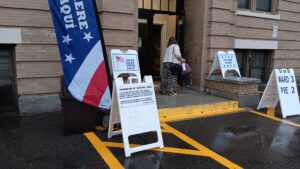
For the second Tuesday in a row, I hung around a polling location with a clip-on camera, in case the Feds tried anything. Except for an ambulance taking someone away, presumably because of a medical issue and not violence, nothing out of the ordinary happened. I got noticed, though.

The amusing thing was a guy standing outside with a Scott Brown sign. Brown was one of the two leading candidates for the Republican Senate nomination; he lost to John Sununu. Sununu has Trump’s endorsement, but Brown is as bad. Sununu supports the SAVE Bill and wants the government to ignore the Constitution’s birthright citizenship clause. I barely looked at the sign holder, but every time I walked by, he tried to talk with me. I don’t know what he was thinking; his comments were just weak attempts at conversation starting. He must have noticed the camera, though, and I’m hoping that he was nervous because of that. At one point he suggested I pick up a Goodlander sign that was lying on the ground, though I’d shown no sign of partisan preference; Goodlander has won respect for standing up to Trump’s call for her execution.

That’s not much. One guy with a camera maybe making one Trumpist worry that if ICE goons showed up, they could be caught on camera. But if lots of people are watching the polls in November, it could make ICE less inclined to intimidate people. And if it still does, there will be more video records of its action.

It’s not much, but it’s something.


SUBSCRIBE

Enter your email address to subscribe and get notifications of new posts by email.


ICE watching in Haverhill   Recently updated !

Donald Trump has refused to rule out sending ICE agents to the polls, even though sending armed federal agents to a polling place is illegal. They wouldn’t have to do anything beyond being there to intimidate voters, and their presence in well-chosen places could influence an election’s outcome.

We can discourage it by making sure there are observers at high-risk locations to record them if they show up. Big Brother, knowing he’s the one being watched, may be more reluctant to follow through. Knowing this, on September 1 I went to the City Hall in Haverhill, Mass., a polling place for the state primary. It’s less likely ICE would interfere with the primary, but it’s good practice and establishes my commitment for November. Next week I have similar plans for the New Hampshire primary, though I haven’t decided where. I chose the Haverhill location because a valued friend was working at the polls there.

Entrance to voting at Haverhill, MA City HallIt was boring work, which is a good thing. It was also miserable weather. Part way through the morning, I had to go home and change into dry socks. I was standing intermittently for four hours, which says I’m in better shape than I thought. Forgetting that ultraviolet doesn’t care about clouds, I got a slight sunburn on my ear.
Did I accomplish anything? I made a few people aware someone was standing by with a camera in case anything nasty happened. While I was there, I had a friendly conversation with the cop who was stationed there and told some of the poll workers what I was doing; my friend probably explained further when I wasn’t there. I went outside and got some exercise. On top of that, for a few hours I was pushing back against the intimidation of Americans.

It was worth it. It will be worth it again next week, even if it’s as boring as I hope it will be.


SUBSCRIBE

Enter your email address to subscribe and get notifications of new posts by email.


Visiting America’s first public library

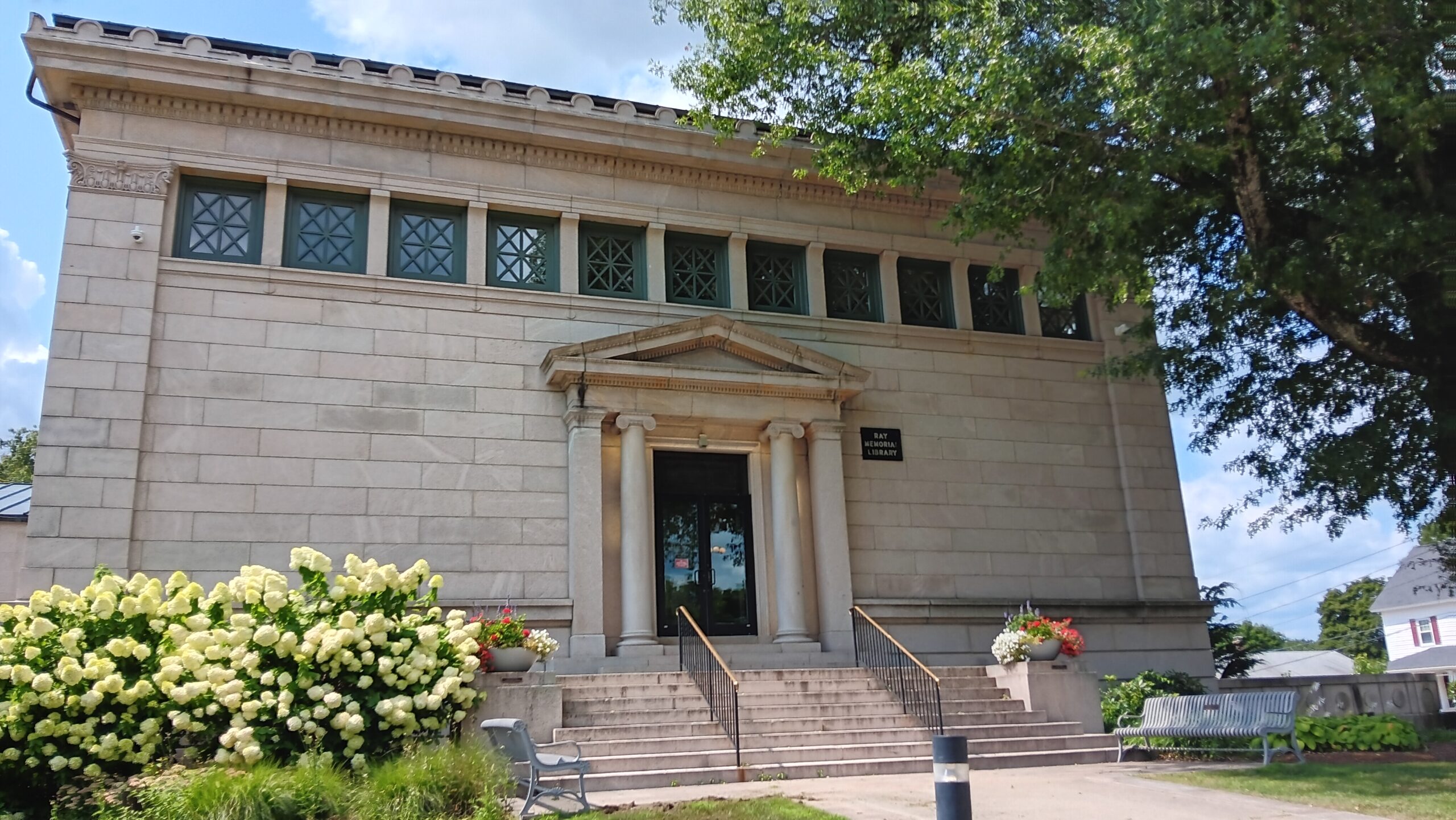
I always enjoy visiting a library I haven’t seen before. The one I visited on August 13 says it’s the oldest public library in the USA, and it doesn’t seem to have any serious challengers. Its story has interesting parallels to the founding of Harvard College’s library. The town in one case and the college in the other got named after the person who gave their libraries a start.

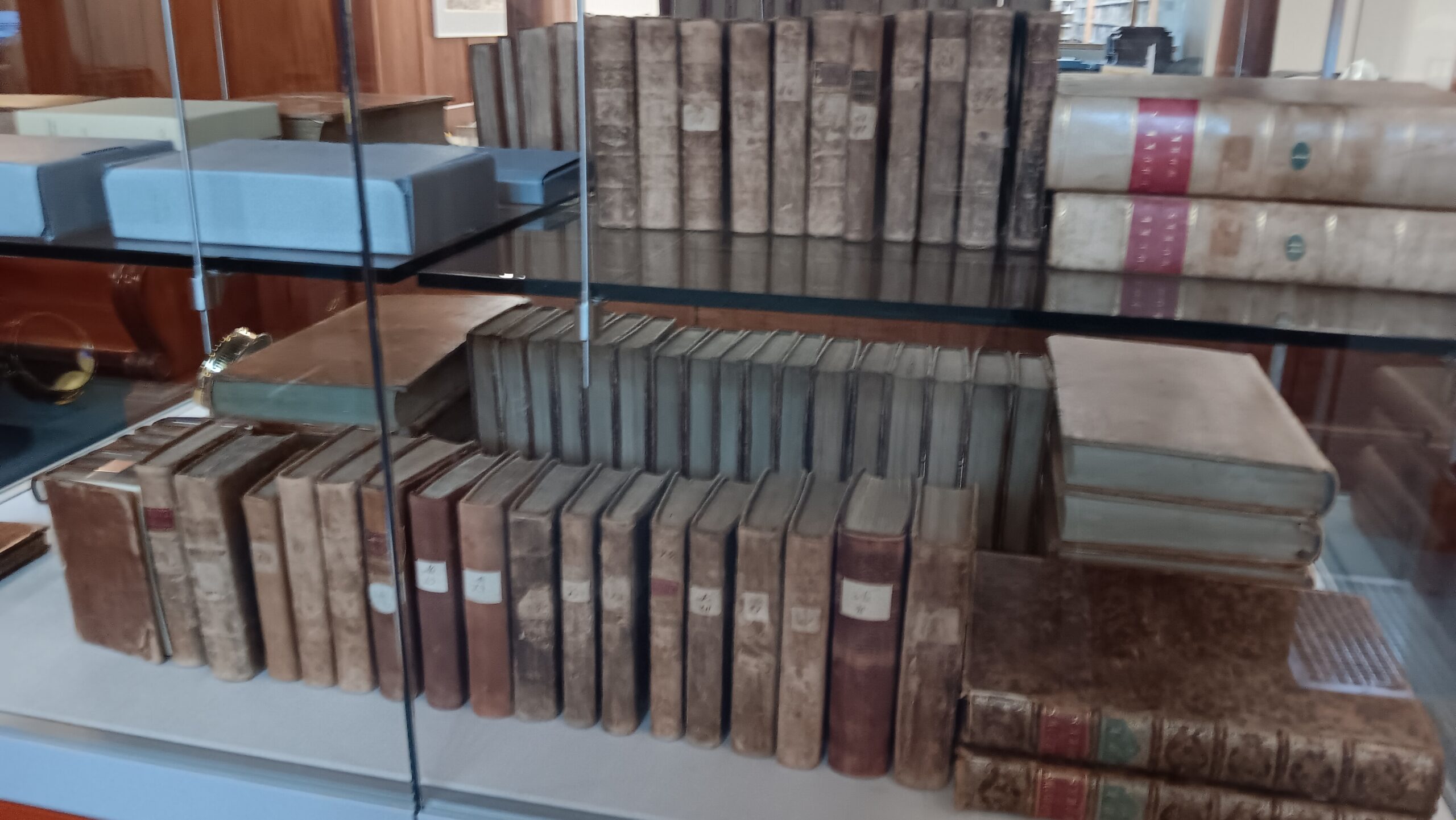
In 1778, a newly incorporated town in Massachusetts called itself Exeter. Benjamin Franklin was popular among the residents, and the town renamed itself Franklin. They asked Franklin if he would donate a bell in acknowledgement. He decided a collection of books would be a better gift, and they became the core collection of a free lending library. Today’s library has those books (or as many as have survived) on display in a glass case. It’s quite a big library for a town of about 30,000 people.

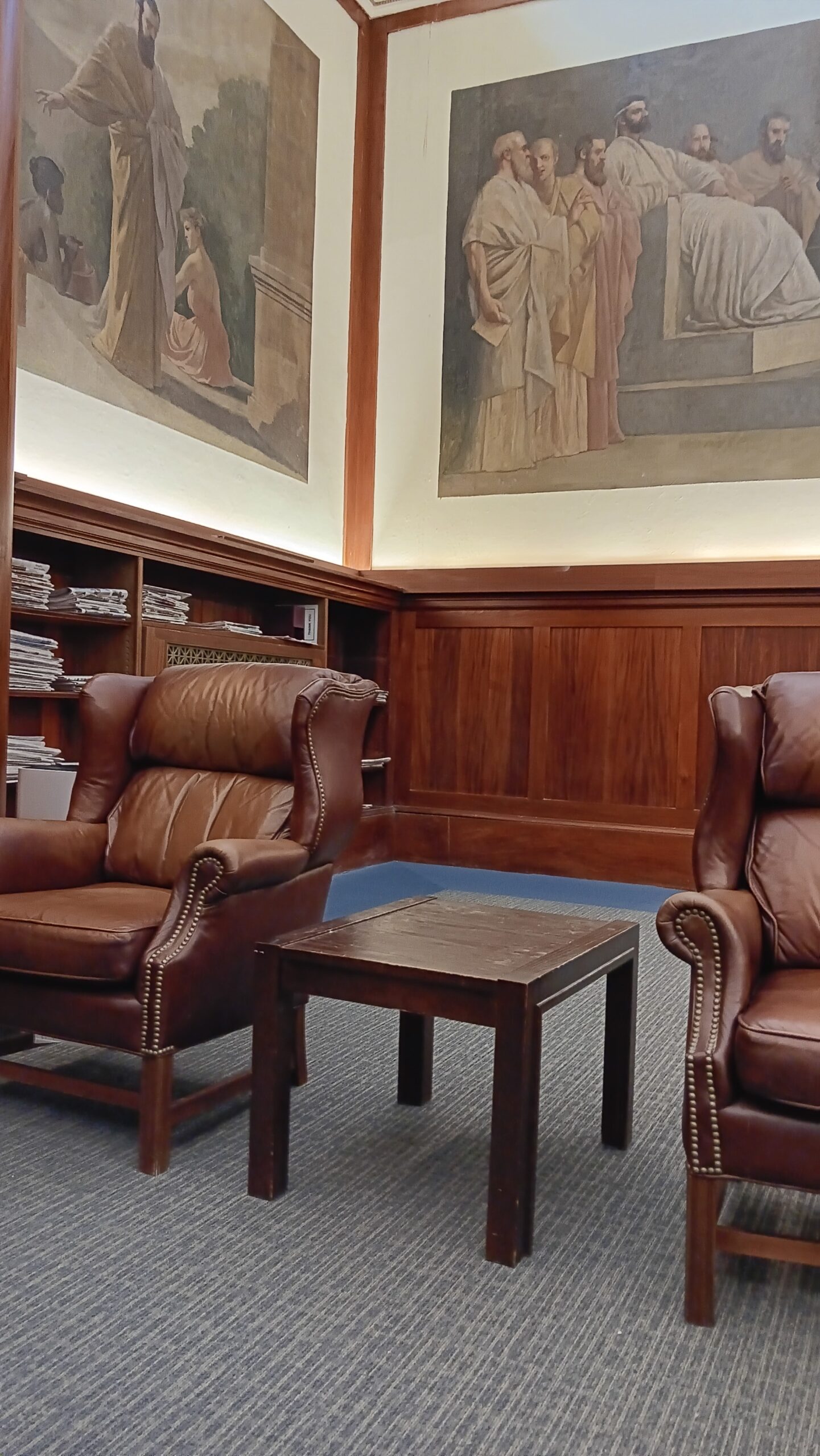
There are reminders everywhere of the library’s origins. The Reading Room is elegant, with soft chairs and murals. A statue of Franklin holding a book is out front.

Franklin (MA) Library

Franklin Public Library

Reading room in Franklin Library

The Reading Room

Books donated by Benjamin Franklin, housed in Franklin (MA) Library

Books donated by Benjamin Franklin


Music discussion on Leaflet

I’ve started a new publication on Leaflet, focused on music in all the ways it interests me. Leaflet is part of the Atmosphere network, about which I have mixed thoughts. It puts a bunch of different services under one account, sort of like Google. For now I’m treating this publication as an extension of my Bluesky account. How long I’ll continue with it depends on what happens with Leaflet and what kind of response I get.

The three areas of music I’m most interested in are filk, classical music, and silent film accompaniment. They might all turn up there. Please subscribe if it’s something you’d like me to follow. That will help me to know someone’s reading.