Book discussion: You Don’t Own Me
I’ve been neglecting book discussion posts. Starting with this one, I want to make them a more regular feature of this blog, at least one a month. Books are important, and doing this will not only help me to get the word out about them, it will push me to read more.
(I thought I’d published this a month ago, but I can’t find it in my blog. Here it is now. My next book discussion should follow very soon.)
Individualism isn’t just a political concept. It’s an outlook on life, the recognition that each person is distinct and important. An outlook that values the individual affects our personal interactions. The arts can affirm this outlook or reject it. Timothy Sandefur’s You Don’t Own Me addresses the intersection of the arts and individualism, with mixed results.
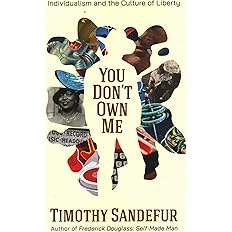 The cover art looks like jigsaw pieces that don’t obviously fit together, which could also describe the book. It’s a series of loosely connected essays. The second one is the text of a speech, which with a little editing would have fitted better into the book. Some of the sections are quite good. “Zora Neale Hurston, Undefeated” makes me want to learn more about that author. On the other hand, “Anarchy, State, and Zombie Dystopia,” a discussion of The Walking Dead, left me confused because he assumes the reader is already familiar with it. Someone not as obsessively familiar as me with Star Trek might say the same of “Navigating by Fixed Stars: The Moral Trajectory of Star Trek.”
Fragmented as it is, the book will still introduce readers to authors and musicians who have upheld individualist values. It may also give them new information about familiar creators. For instance, I hadn’t known that the time from William Sydney Porter’s first published story as “O. Henry” to his death was barely more than a decade. In at least one case I wish he’d given more information; he credits the song “You Don’t Own Me” to singer Lesley Gore but says only that “two men” wrote it. Songwriters should get credit, but too often only the people who sing their songs get it. That’s especially unfair when the lyrics are the important point, as they are in the title essay.
The book isn’t bad, but it’s hard for me to give it a strong recommendation. Sandefur’s Frederick Douglass: Self-Made Man is more interesting, and I’d suggest reading it first. If you like his writing, you may want to come back to this one.